TUMBLEWEED AND SAGEBRUSH
by Rosalie Benet
At church this morning, the pastor used tumbleweed as a metaphor for those who are blown as by the wind and without purpose. That brought back good memories of the desert Southwest where I lived in for a long time.
Tumbleweed have such a ghostly appearance as they roll or tumble weightlessly across the barren desert. If the wind is only a breeze, they roll; if it is a strong wind, they tumble and bounce along like an airy ball. When they encounter an occasional fence, they pile up against it. I have seen this.
Tumbleweed have dry spindly, bramble-like branches, devoid of any foliage; and they are large and round in shape—round, no doubt for all the rolling they do. I always thought tumbleweed were just dead sagebrush until I looked it up today. They are not. They are a species all their own and are not native to this land. It is thought that their seeds came along with Russian immigrants settling in the West and mixed in with another commodity like flax seed.
For a while, tumbleweed grow in the ground and then little grubs help to break them loose to distribute their seed so more tumbleweed can grow, break loose and tumble, spreading their life across the land. Of all the time I have spent in the desert, I don’t remember seeing them actually growing in the ground. Or maybe I thought they were just dead sagebrush.
Tumbleweed are so light in weight that they can make it over a brush fire or forest fire and start fires where they land, sometimes burning buildings and other collateral.
I looked up sagebrush, too. After living in the desert, I never thought anyone would want to actually buy sagebrush (It’s against the law to dig them up.) But, people can buy them from growers. If they are well watered, they grow into a big bushes or trees. They must look lovely in well-watered landscapes and gardens. Even in the desert, their leaves are a wonderful silvery blue-green. They have tiny yellow flowers if it rains enough. In the desert, they are as common as dandelions in Ohio.
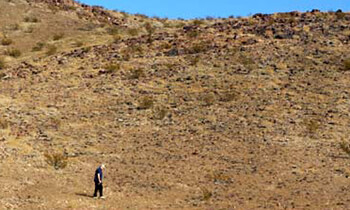
Sagebrush, where it is especially dry, are only two or three feet high. They grow where little else does in the stillness of a white-hot day. It is a desolate landscape where all living things seek shade where there seemingly is none. The occasional lizard is the only one who finds it as he darts a short distance from sagebrush to sagebrush.
I love the desert, its heat, its silence and peace. God is surely there. However, I prefer a cooler day in Spring or Fall. Summer is too simmering for anybody.




Share this page on Facebook:
The Desert Environment
The North American Deserts
Desert Geological Terms


