Prehistoric
Desert Peoples
The Hohokam
200 B.C. -- 1450 A.D
The Hohokam peoples occupied a wide area of south-central Arizona from roughly Flagstaff south to the Mexican border. They are thought to have originally migrated north out of Mexico around 300 BC to become the most skillful irrigation farmers the Southwest ever knew.
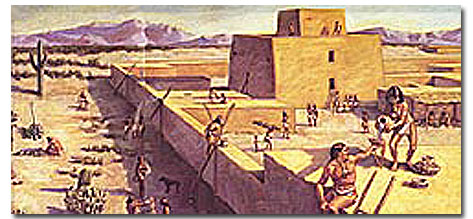
The ingenious Hohokam developed an elaborate irrigation network using only stone instruments and organized labor. Before modern development obliterated this system, their predecessors commonly referred to them as the Canal Builders.
The Hohokam were creative artisans who became famous for their intricate work with shells obtained from the Gulf of California and the Pacific coast. They created a coiled pottery finished with a paddle and painted with red designs. They retained a great deal of Mesoamerican influence as can be seen in their use of ball courts and decorative feathers.
They also became entrepreneurs in a thriving trade with their neighbors, the Anasazi and the Mogollon. Their fate is unclear, but they seem to have disappeared from the archeological record between the first half of the 15th century and the time when the Spanish first came upon their descendents, Pima-speaking Indians still using the ancient irrigation techniques. Some of their original irrigation canals are still being used in the Phoenix area today!
Hohokam Archeological Sites
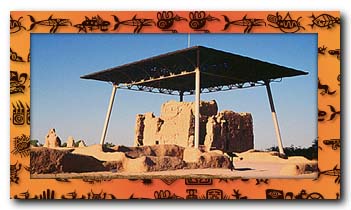
- Casa Grande Ruins National Monument, AZ
- Catalina State Park, AZ
- HohHardy Site, AZ
- Hohokam-Pima National Monument, AZ (Snaketown)
- Painted Rocks Park, AZ
- Sabino Canyon Recreation Area, AZ
- Saguaro National Park, AZ
-- A.R Royo

Related DesertUSA Pages
- How to Turn Your Smartphone into a Survival Tool
- 26 Tips for Surviving in the Desert
- Death by GPS
- 7 Smartphone Apps to Improve Your Camping Experience
- Maps Parks and More
- Desert Survival Skills
- How to Keep Ice Cold in the Desert
- Desert Rocks, Minerals & Geology Index
- Preparing an Emergency Survival Kit


Share this page on Facebook:
The Desert Environment
The North American Deserts
Desert Geological Terms


