
In the heart of the scorching desert, amidst the unforgiving terrain where life struggles to take root, there exists a silent yet profound symbol of resilience and elegance—the Desert Lily. With its striking white blossoms and slender leaves, this remarkable plant defies the harshness of its environment, thriving where few others can.

About the Desert Lily
The Desert Lily, scientifically known as Hesperocallis undulata, though not a true lily, belongs to the Agavaceae family. Native to the arid landscapes of the Southwestern United States and Mexico, it graces sandy, well-drained soils with its presence. Its blooming cycle, a spectacle to behold, is triggered by rare desert rains, transforming the monotony of the desert into a canvas of vibrant colors.
When Does the Desert Lily Bloom?
The Desert Lily typically adorns the desert with its splendor from late February to early April, although this timing can vary based on local climate and environmental conditions. However, its blooming phenomenon is intricately tied to the capricious rainfall patterns of its habitat. A sufficient downpour during the winter months is crucial to awaken this sleeping beauty from its arid slumber.
In years blessed with adequate rainfall, the Desert Lily orchestrates a breathtaking display of fragrant, ivory flowers, a stark contrast against the barren desert backdrop. Yet, in times of drought, it conserves its resources, withholding its floral exhibition until more favorable conditions emerge. This adaptive strategy underscores the plant’s remarkable ability to endure and thrive in the face of adversity.
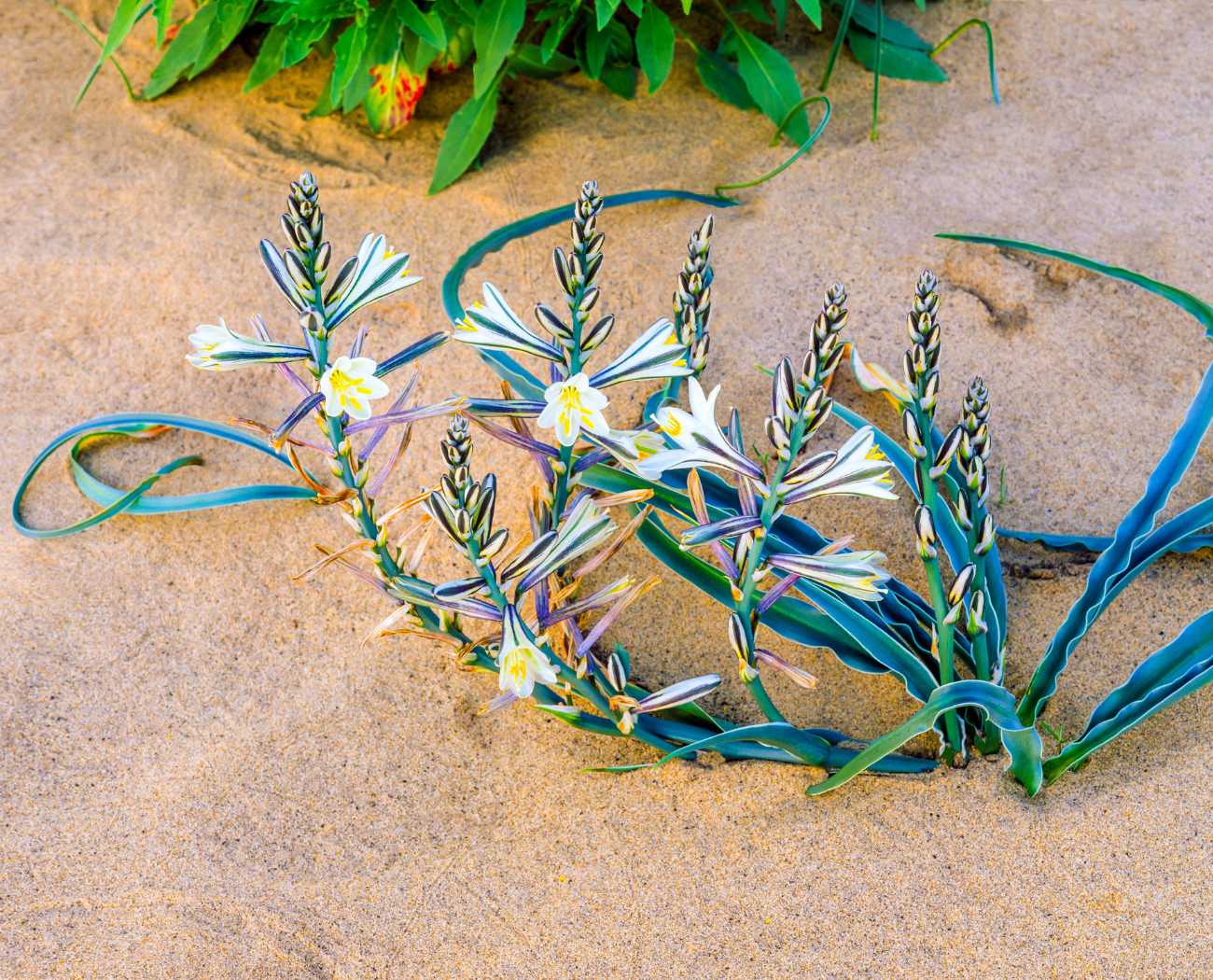
Desert Lily Description
Defined by its undulating, bluish-green leaves and towering stalks, the Desert Lily can reach heights of up to two feet. Its trumpet-shaped flowers, imbued with a delicate fragrance, beckon pollinators such as bees and moths, perpetuating the cycle of life in the desert. With its extensive root system delving deep into the earth, this resilient plant possesses the means to withstand prolonged periods of drought, a testament to its evolutionary prowess.
Cultural Reverence and Historical Significance
Beyond its botanical allure, the Desert Lily occupies a revered place in the cultural and historical tapestry of the Southwestern United States and Mexico. For indigenous peoples, it represents more than just a plant—it embodies sustenance, healing, and a connection to ancestral traditions. Across generations, the Desert Lily has woven itself into the fabric of cultural practices, serving as a tangible link to a time when survival hinged on an intimate understanding of the land.
From antiquity, indigenous communities recognized the multifaceted utility of the Desert Lily. Its bulbs, harvested with care, offered nourishment during lean times, while its medicinal properties provided solace amidst the harsh realities of desert life. Moreover, its fibrous leaves were ingeniously fashioned into indispensable items such as sandals, baskets, and mats, showcasing the resourcefulness of those who thrived in these harsh environments.
As European settlers traversed these arid landscapes, they too embraced the Desert Lily’s remarkable attributes, integrating it into their own survival strategies. Over time, it evolved into a symbol of resilience and endurance, its delicate blooms serving as a poignant reminder of life’s tenacity even in the most inhospitable conditions.

Myths and Legends: Unraveling the Mystique of the Desert Lily
The Desert Lily’s ethereal beauty and resilience have stirred the imagination of cultures across time, giving rise to a tapestry of myths and legends. Among indigenous peoples, it is often portrayed as a symbol of hope and survival, its blossoms said to emerge from the tears of lost lovers, signifying the persistence of love and life amidst desolation.
In some traditions, the Desert Lily is hailed as a guide to hidden water sources, its presence believed to herald the promise of life-giving sustenance. Moreover, it is endowed with protective qualities, warding off malevolent spirits and offering solace to weary travelers in the vast expanse of the desert.
Additionally, the Desert Lily symbolizes fertility and rebirth, its ability to lie dormant and bloom anew with the advent of rain embodying the cyclical nature of life. This motif finds resonance in spring ceremonies and rituals, celebrating the earth’s renewal and the abundance that follows the barren winter months.
Preserving the Legacy of the Desert Lily
By understanding and appreciating the Desert Lily in all its complexity, we honor not only a remarkable species but also the enduring legacy of those who have cherished and revered it throughout history.