
In the annals of American Westward expansion, few stories are as harrowing and evocative as that of the Lost ’49ers. This group of pioneers, part of the mass migration spurred by the 1848 discovery of gold at Sutter’s Mill in California, embarked on a journey fraught with peril, a testament to the indomitable human spirit and its quest for a better life. Their tale, integral to the history of the place now known as Death Valley, serves as a poignant reminder of the costs and challenges faced by those who dared to dream during the Gold Rush era.

A Late Departure with Hopeful Hearts
The journey of the Lost ’49ers began in October of 1849, a departure considered dangerously late for crossing the Sierra Nevada safely. With the disaster of the Donner Party still fresh in collective memory, the pioneers hoped to avoid a similar fate by taking a route around the south end of the Sierra Nevada, safe for winter travel. This route, known as the Old Spanish Trail, was untested by pioneer wagon trains, adding an element of the unknown to their journey.
A Divisive Shortcut
The pivotal moment came when the group, then part of the San Joaquin Company, encountered a young man with a hand-sketched map promising a “shortcut” that would cut 500 miles off their journey. The allure of this quicker path led most of the 107 wagons to diverge from their original route, leaving the Old Spanish Trail near present-day Enterprise, Utah. This decision marked the beginning of their descent into hardship.
Challenges and Division
Almost immediately, the group faced a daunting obstacle: a gaping canyon at the Utah-Nevada state line. Disheartened, some turned back, but over 20 wagons pressed on, navigating around the canyon in a tedious and time-consuming effort. The group’s passage through present-day Panaca, Nevada, and over summits and barren valleys to Groom Lake was marked by disputes over direction, eventually leading to a split between the Bennett-Arcan party and the Jayhawkers.
Desperation in Death Valley
Both groups found themselves in Death Valley, saved from dying of thirst by an unexpected snowstorm. Their arrival at Travertine Springs on Christmas Eve of 1849 marked nearly two months since they had left the Old Spanish Trail. Weakened oxen, battered wagons, and the towering Panamint Mountains presented insurmountable challenges. The Jayhawkers, including the Brier family, made the difficult decision to abandon their wagons, slaughtering several oxen for food and crossing the Panamint Mountains on foot.
A Heroic Rescue
The Bennett-Arcan party, unable to cross the Panamint Range, sent two young men, William Lewis Manly and John Rogers, on a desperate mission for supplies. Their epic journey over the mountains and back, covering more than 300 miles, ultimately saved the remaining members of their group. The phrase “Goodbye, Death Valley,” purportedly uttered as they left the valley, bestowed the region with its ominous name.
Legacy of the Lost ’49ers
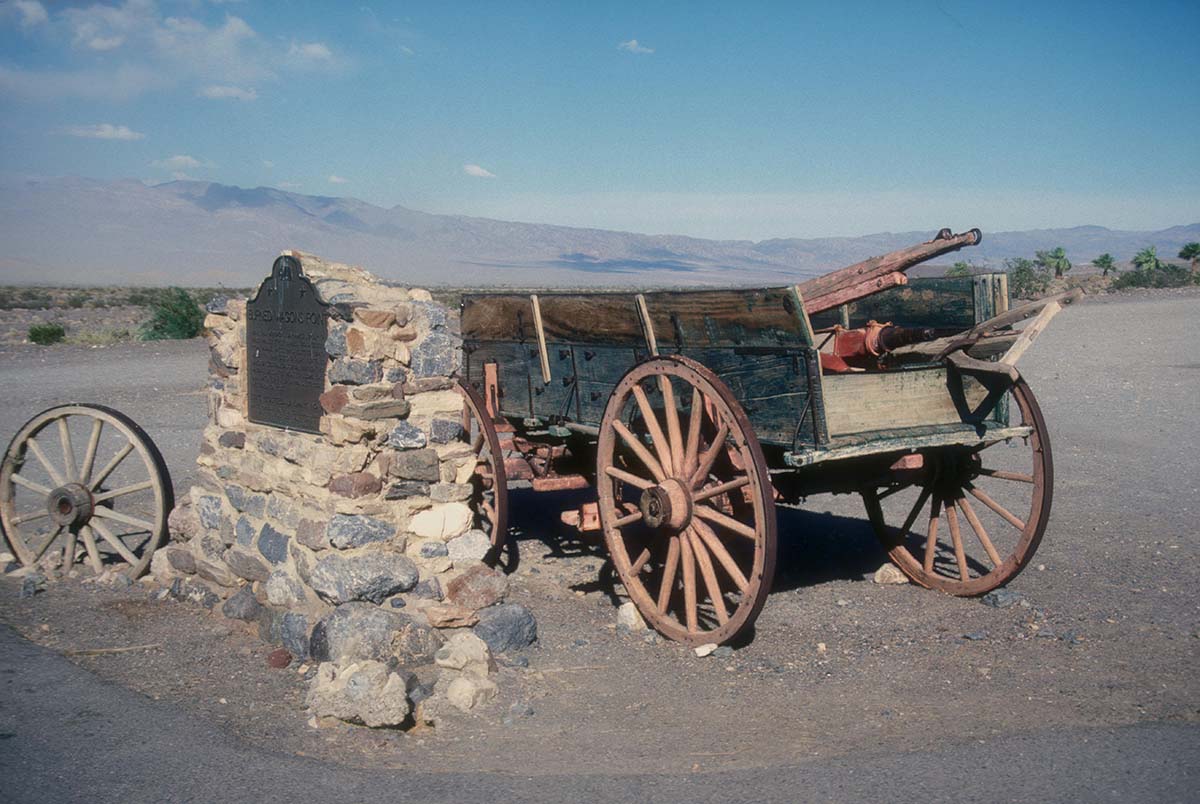
The ordeal of the Lost ’49ers, which lasted four months and claimed many lives, is a stark illustration of the dangers and uncertainties of the pioneer journey to California. Their story, commemorated near the Jefferson Hunt Monument, is a narrative of survival, determination, and the human capacity to endure in the face of overwhelming odds.
The Lost ’49ers’ trek through Death Valley remains a powerful narrative within the larger story of America’s westward expansion, embodying the risks undertaken in the pursuit of dreams and the stark realities faced on the frontier. Their journey serves as a compelling chapter in the history of the American West, a testament to the resilience and perseverance of those who shaped the nation’s destiny.