
The Yuma Crossing, located along the Colorado River in southwestern Arizona, holds an important place in the history of trade and transportation in the American Southwest. Anchored by Fort Yuma, a military outpost, and the nearby Fort Yuma Trading Post, this strategic location facilitated steamboats’ movement of goods and supplies. Let’s delve into the rich history of the Yuma Crossing, the role of Fort Yuma, and how steamboats navigated the Colorado River to transport essential commodities.
The Yuma Crossing
For thousands of years, the Yuma Crossing has been a vital crossing point for indigenous peoples. It was a crucial point on the Colorado River where individuals and communities could safely cross the river, as it was one of the few areas where the river could be forded.
It became even more significant during the 19th century when European and American settlers utilized it as a gateway to the West. This natural crossing offered a safe passage over the Colorado River. It became a crucial link on the Southern Emigrant Trail during the California Gold Rush era.

Fort Yuma
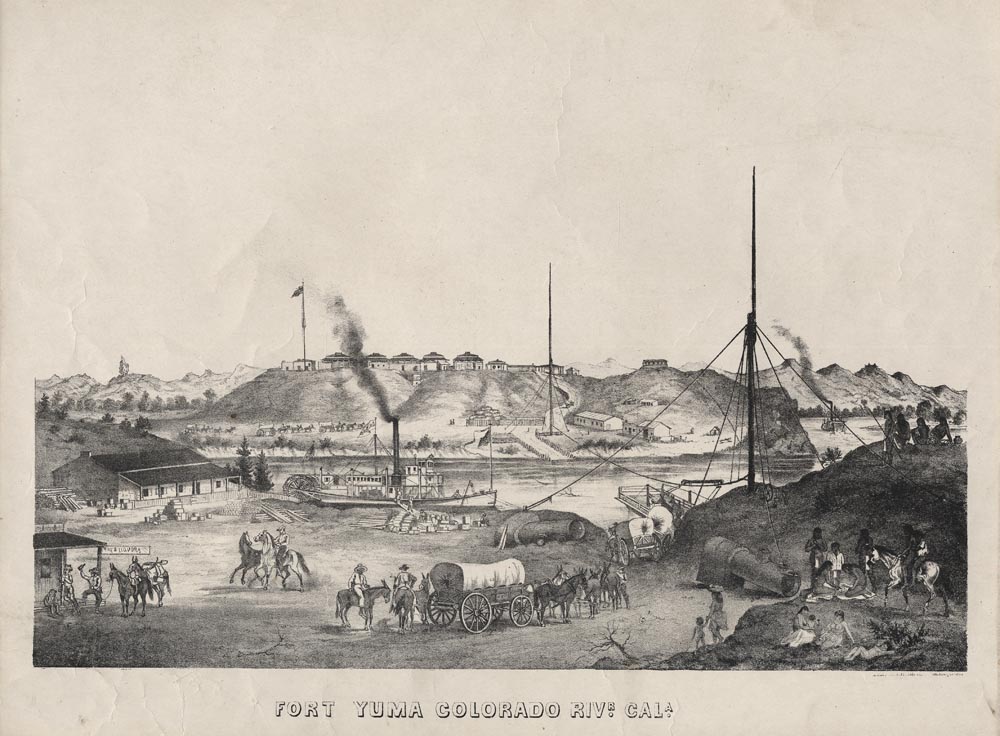
Established in 1850, Fort Yuma played a pivotal role in maintaining peace and security in the region. Initially constructed as a temporary adobe structure, it was replaced by a more substantial adobe and wood fortification. Fort Yuma was a safeguard for settlers, miners, and travelers, protecting them from potential conflicts with Native American tribes and maintaining control over the Yuma Crossing. The fort played a crucial role in the protection of mail routes, immigrants, and travelers during this period.
Fort Yuma Trading Post
Adjacent to Fort Yuma, the Fort Yuma Trading Post became an essential hub for trade and commerce in the region. The trading post facilitated interactions between Native Americans, European Americans, and Mexican communities, fostering cultural exchange and economic growth. Here, traders exchanged a wide array of goods, including fur, livestock, agricultural products, and various supplies necessary for survival in the frontier.
Steamboats on the Colorado River
Steamboats revolutionized transportation in the American Southwest, and the Colorado River played a crucial role in this transformation—steamboats allowed for the efficient movement of people and cargo, enabling trade and settlement in the region. Steamboats navigated the challenging waters of the Colorado River, contending with shifting sandbars, fluctuating water levels, and treacherous currents.
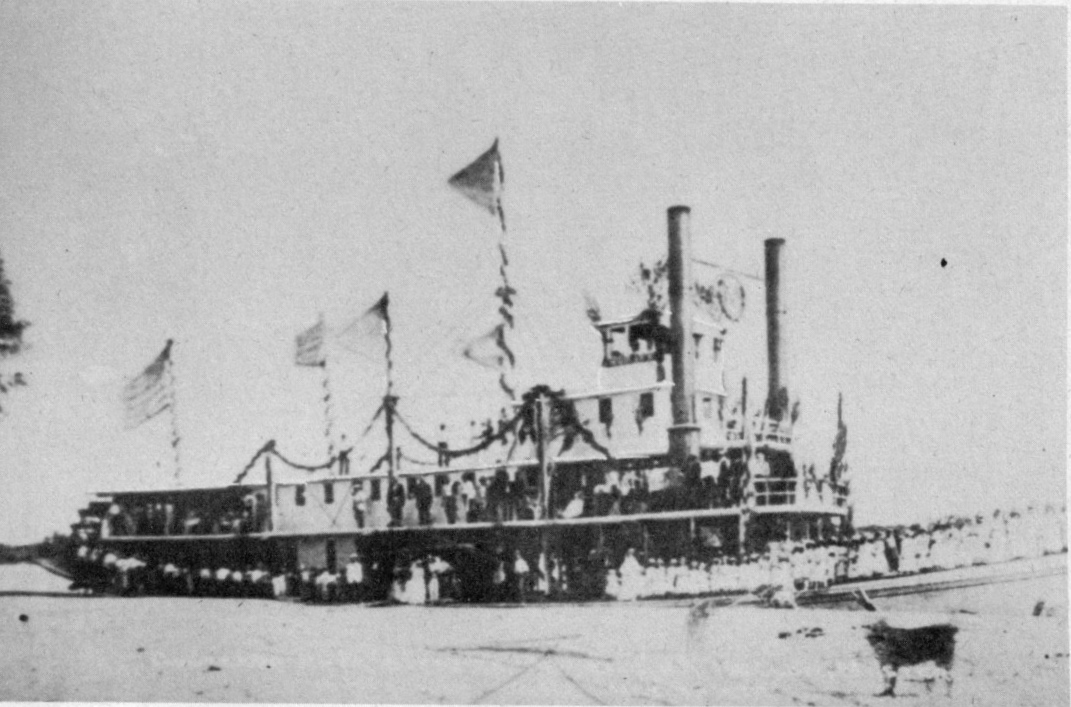
In November 1852, the Uncle Sam, a side-wheel paddle steamer, made history as the first steamboat on the Colorado River. It was transported from San Francisco to the river delta by the schooner Capacity under the supervision of Captain James Turnbull, who had a contract to supply the fort. The Uncle Sam was assembled and launched in the estuary, approximately 30 miles (48 km) above the mouth of the Colorado River.
Transporting Goods and Supplies Up The Colorado River
Steamboats transported many goods and supplies to Fort Yuma and other settlements along the river. These included construction materials for the fort’s expansion, military equipment, food provisions, clothing, ammunition, and various trade goods. The boats served as floating warehouses, providing a lifeline for the fort’s operations and the surrounding communities.
Steamboats operated on the Colorado River from the river mouth at the Colorado River Delta on the Gulf of California, Mexico, to the Virgin River in the Lower Colorado River Valley in the Southwestern United States. This stretch of the river, which covers a significant distance, was navigated by steamboats between 1852 and 1909.
During this period, steamboats were vital in transportation, trade, and settlement along the Colorado River. They facilitated the movement of people and goods, connecting various communities and serving as a lifeline for economic activities in the region. These steamboats transported supplies, equipment, and passengers to settlements, mining camps, military posts, and trading centers along the river.
Completing the Laguna Dam in 1909 marked a significant turning point in using steamboats on the Colorado River. The dam’s construction resulted in the formation of the Imperial Reservoir, which hindered the river’s navigability. As a result, the era of steamboat navigation on the Colorado River gradually ended, making way for alternative modes of transportation and infrastructure development in the region.
From the Sea of Cortez to the Colorado River
Coastal Ports and Sea-going Vessels
Coastal ports along the Sea of Cortez, such as San Felipe, Guaymas, and La Paz, served as points of departure for sea-going vessels. These vessels would sail from these ports and travel northward along the coast toward the Colorado River delta.
Navigation of the Colorado River Delta
The mouth of the Colorado River forms a delta where it meets the Gulf of California. Sea-going vessels entering the delta navigated the estuary and channels leading to the Colorado River itself. The delta’s shallow and shifting nature presented navigation challenges, requiring skilled pilots familiar with the route.
Steamboat Navigation Upstream
Once the sea-going vessels reached the Colorado River, the cargo was transferred to smaller steamboats suitable for navigating the river’s inland waters. These steamboats were specifically designed to operate in the Colorado River’s shallow and sometimes treacherous conditions.
Upstream Navigation
The steamboats would then travel upstream, against the river’s current, to reach various destinations along the Colorado River. Wood was a primary source of fuel for steam-powered vessels during that era. Along the riverbanks were areas designated as woodlots where steamboats could find readily available wood for fuel. These woodlots were often strategically located to provide fueling opportunities at regular intervals along the route.
The cargo onboard the steamboats could include a variety of goods, such as supplies, trade items, agricultural products, and mining resources, destined for settlements, forts, trading posts, or other locations along the river.
Distribution at River Ports along the Colorado River
River ports, such as Yuma, Fort Mohave, and other settlements along the Colorado River, served as distribution hubs for the cargo transported from the Sea of Cortez. Here, the shipment was unloaded, and further transportation or distribution would occur either by overland routes or by transferring to smaller vessels for continued river navigation.
The Yuma Crossing: A Natural Gateway
The Yuma Crossing, Fort Yuma, Fort Yuma Trading Post, and the steamboats on the Colorado River played interconnected roles in shaping the trade and transportation networks of the American Southwest. The Yuma Crossing served as a natural gateway. At the same time, Fort Yuma and the trading post ensured the safety and facilitation of commerce. Steamboats navigated the challenging Colorado River, bringing essential goods and supplies to support the fort and foster economic development in the region.
Today, the legacy of the Yuma Crossing and Fort Yuma is a testament to the region’s rich history and significance in the development of the American Southwest. The Yuma Crossing National Heritage Area preserves and commemorates the historical significance of the Yuma Crossing. It encompasses a series of parks, trails, and historic sites that provide visitors with insights into the area’s rich history and cultural heritage. The Yuma Crossing is recognized as an important historical landmark and serves as a reminder of the region’s past significance as a transportation and cultural hub.