
2026 Death Valley Wildflower Reports
Wildflower Bloom Calculator – NEW
2026 Death Valley Wildflower Reports
May 7 2026, DesertUSA Reports: The wildflowers are pretty much gone. We’ve added a wildflower bloom calculator to help you better time next year’s wildflower bloom. There were still plenty of fun things to do in the desert, but it’s getting hot, so be careful.
April 1, 2026, Death Valley National Park Reports: Due to hot weather and high winds, many areas are now past-peak. Low-elevation flowers are setting seed (this is the area that was a “superbloom” of yellow and purple hillsides). Higher elevations will have blooms April-June (these flowers tend to be in clusters between shrubs and don’t create hillsides of color).
3/16/2026 report
- Badwater Rd (between CA190 and Sidewinder Canyon): Desert Gold, Phacelia, Mojave Star. Some flowers remain, most are setting seed.
- Beatty Cutoff: Phacelia, Desert Gold, Gravel Ghost
- Panamint Valley: occasional Desert Gold patches; brittlebush by Father Crowley Vista.
March 9, 2026, Stephen Reports: Notch-leaved phacelia, or scorpionweed, Phacelia crenulata, grows where water flows. That’s the lesson I learned during my trip to Death Valley this year. There are spots to see Notch-leaved phacelia along the roadside, but the most scenic areas are far off the beaten path. Here, I’m in a canyon a mile from the road. On the right, you can see some cars parked on the playa—that’s Devil’s Golf Course. Get it while you can! Petals are dropping! The wholesale desiccation has begun!

March 5, 2026, Stephen Reports: The wildflower bloom in the low elevations of Death Valley is at its peak right now. Most flowers are fully bloomed and still healthy. Almost no unopened buds are visible, so it won’t get any better. It’s by far the best I’ve seen in Death Valley. The area of blooming flowers is spectacular, especially along Badwater Road and for several miles north of Furnace Creek along Hwy 190. The best flowers were on Badwater Road about 2 miles north of Sidewinder Canyon (south of Badwater). There, there’s a great dense display of Sunflower and Phacelia.
We also discovered an impressive display of Phacelia on a 300-foot hill south of Hwy 190 near Mesquite Flats Sand Dunes. It’s a 1/4-mile off-trail walk. The hilltop offers great views as well. There are a surprising number of scattered flowers around Artists Palate, including many Five Spot flowers. Additionally, there is great Brittlebush near the Darwin Falls trailhead next to Hwy 190.
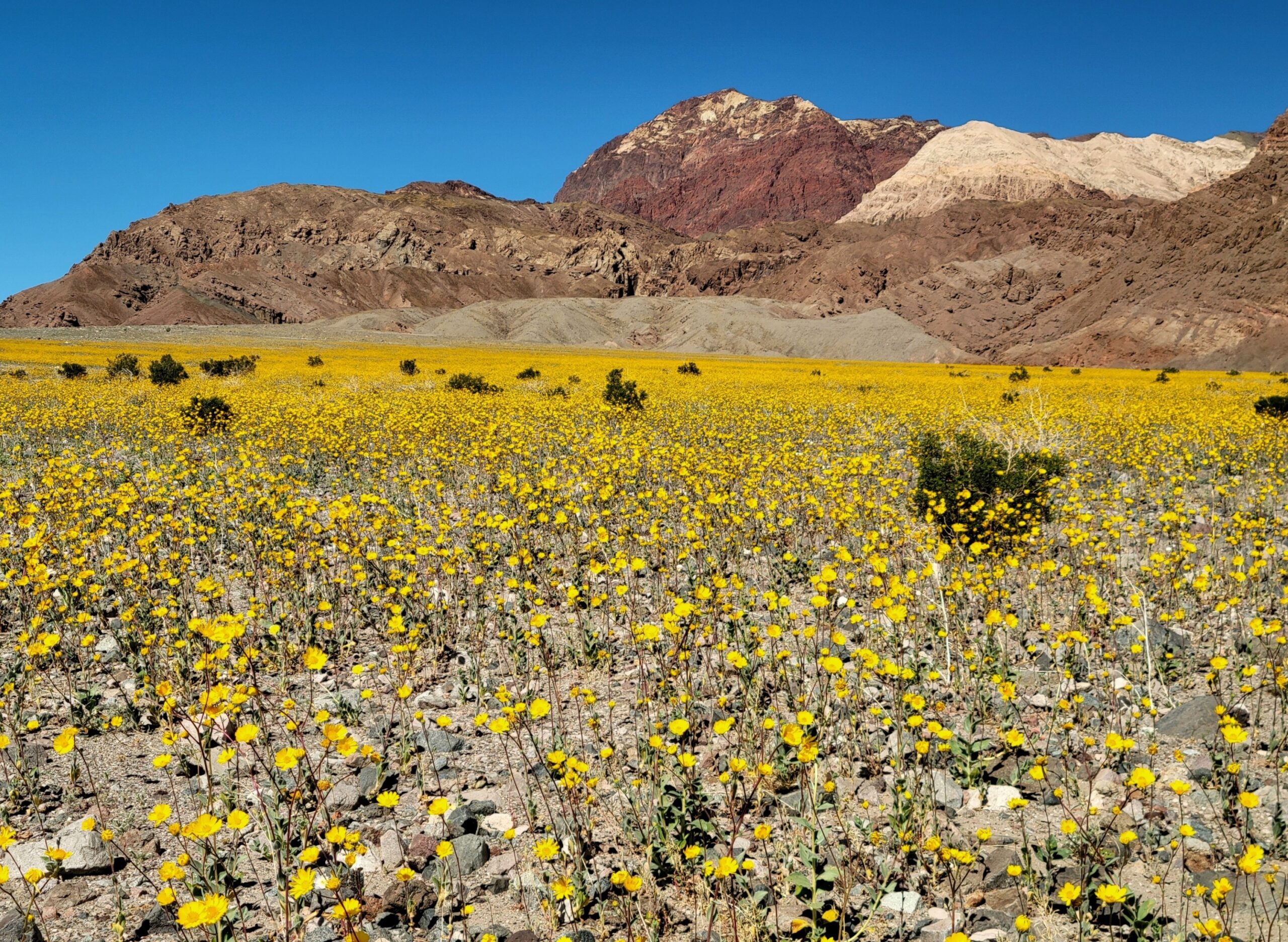
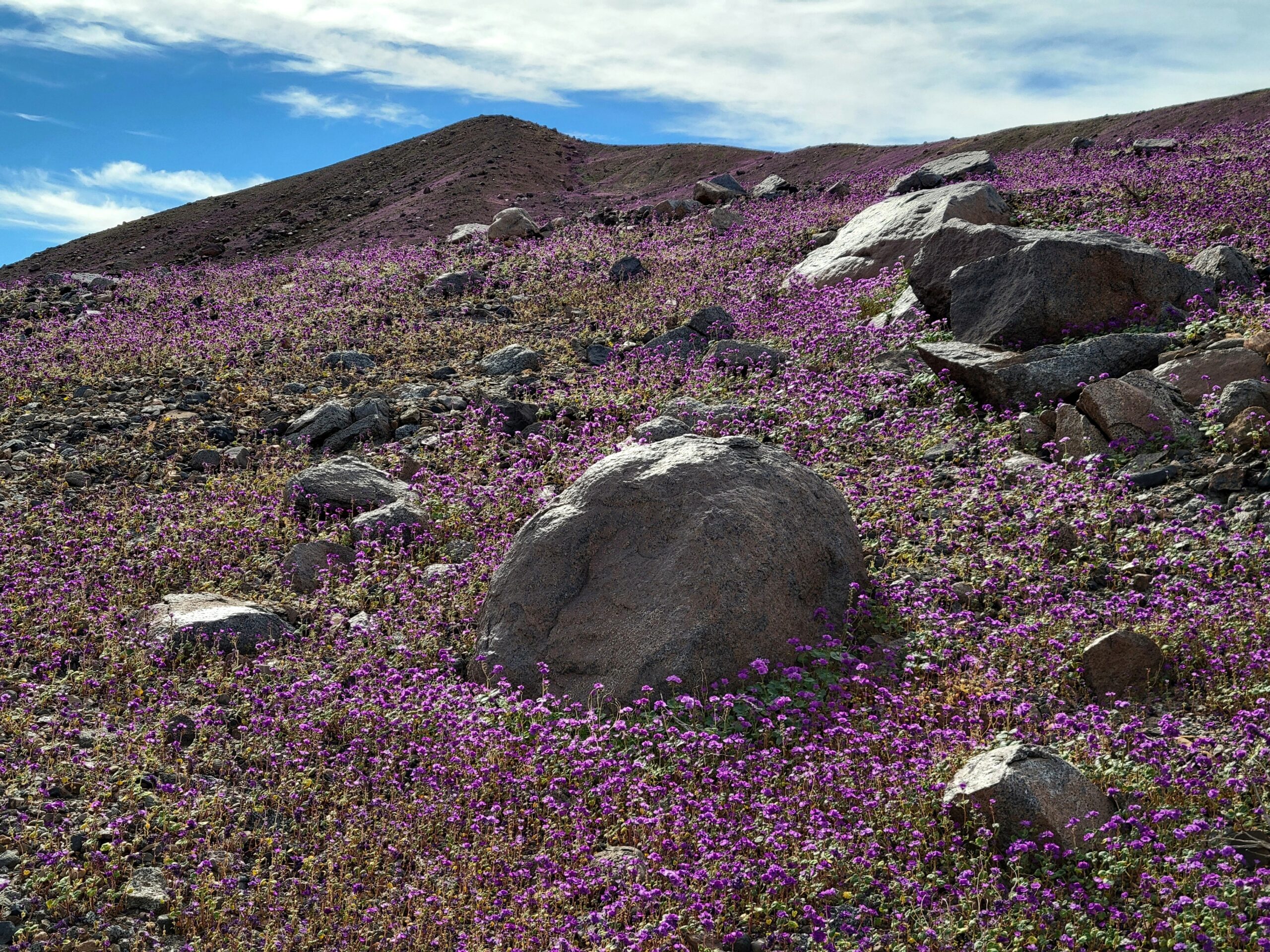
March 4, 2026, David Reports: Death Valley along Badwater Road.

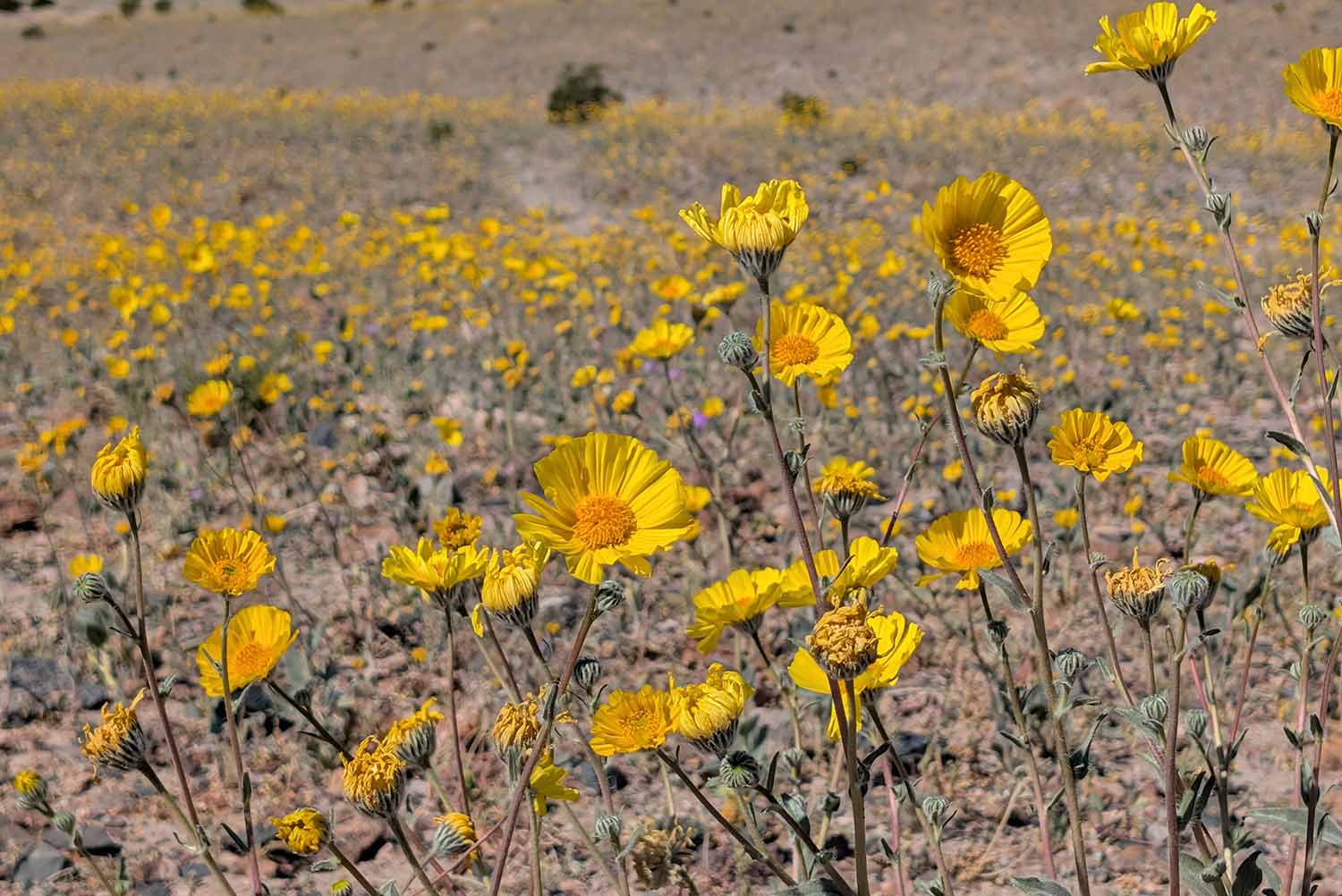


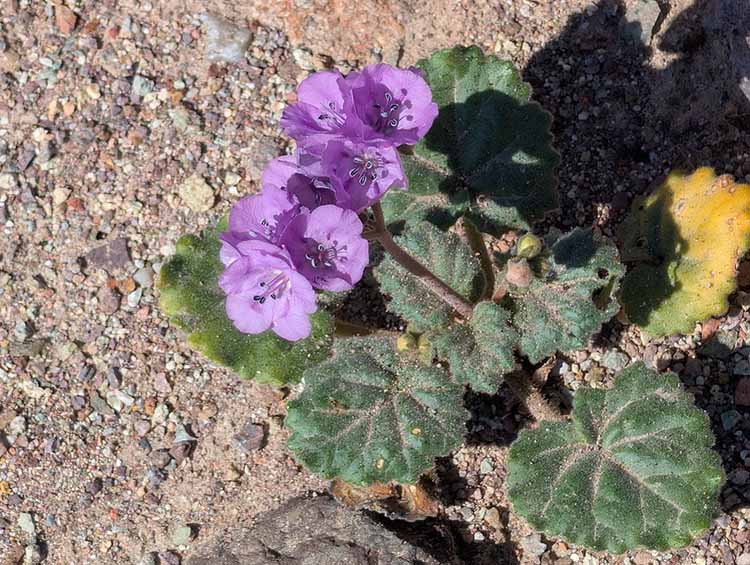
March 3, 2026, Scott Reports: ots of desert sunflowers along Death Valley’s Harry Wade Road. Due to very long stretches of deep sand, a very capable 4×4 rig is required to get there. I never saw anybody else while I was driving around, walking about, looking at, and photographing flowers. I passed one rig on Saratoga Springs Road when coming in, but it never caught up to me. As I left the area, four jeeps came in from Ashford Junction.

Standing short of the south bank of the Amargosa River, a few hundred yards east of Harry Wade Road, looking west towards Telescope Peak.

On Harry Wade Road, about a mile north of the Amargosa River, looking east. That line of creosote bushes at the far edge of the flats is about two miles away.
March 1, 2026, David Reports: The best displays of desert gold I’ve seen are between mile markers 25 and 27 on the Badwater Road, as good as anything I have ever seen, including 1998 and 2016. Also, some spectacular patches of Phacelias. The photos are from that area today. Nice sand verbena patches up the road from Ashford Mill, about 3-4 miles, especially on the north side. Photo from there. Very warm (low 90s today and yesterday). Enough gravel ghosts and five-spots to make me happy.
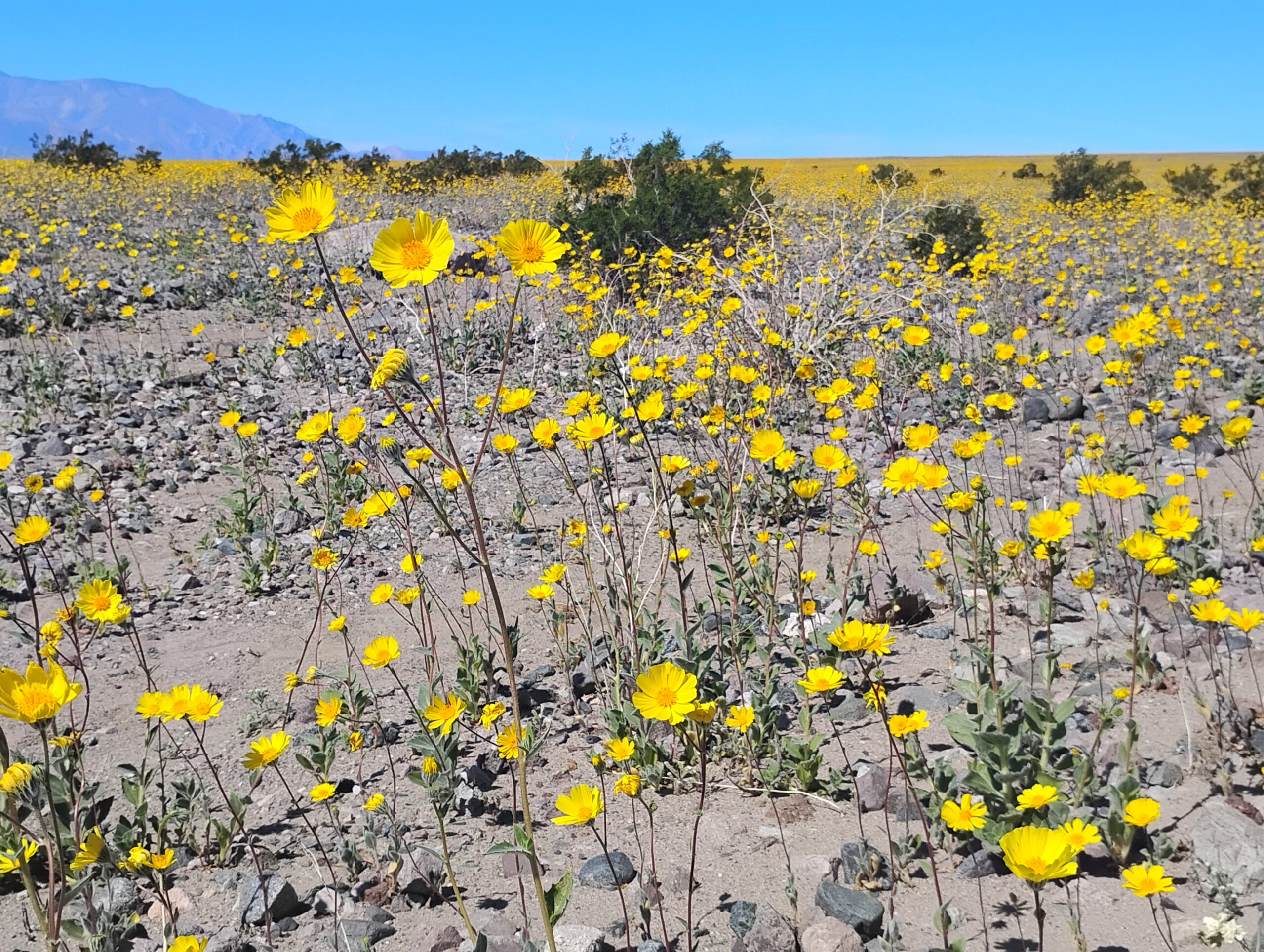


Feb 27 2026, Mary Reports: Seems a bit different from other good blooms at Death Valley. Desert gold is blooming north of Furnace Creek at the same time as around Ashford Mills, rather than a few weeks later. In addition to the desert gold at Ashford Mill and just south of there along Badwater Road, there is a nice display of desert gold at MM 26 on Badwater Road and the first couple of miles of the Beatty Cut off, plus other places. Pretty golden evening primroses in places along Highway 190. Phacelia is having a good year, with swaths of purple in places. Lots of flowers to see.

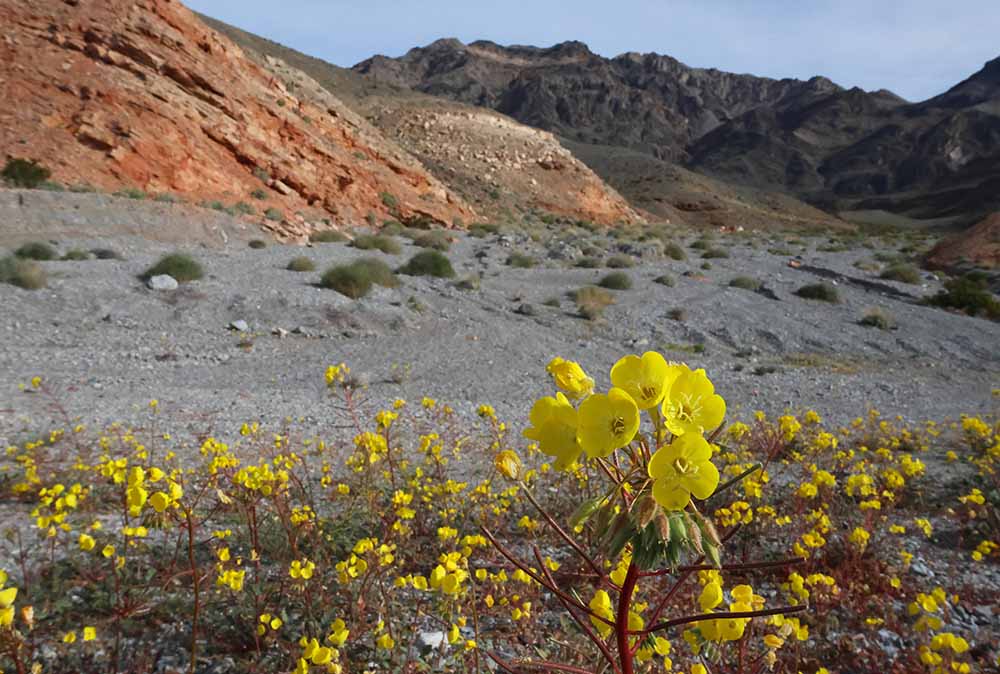
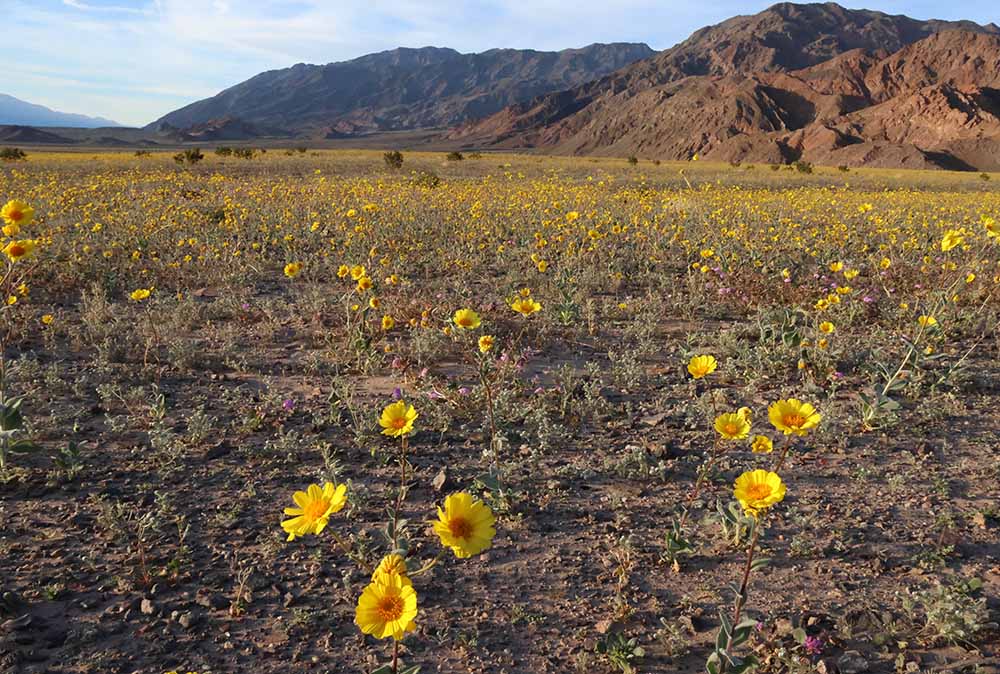
Feb 24 2026, Rick and Margarita report: Death Valley NP South End. Starting at Salisbury Pass, going into the southern end of Death Valley, halfway down, some wild flowers start to show. From Jubilee Pass to Ashford Mill, there is quite a bit of Desert Gold and Sand Verbena showing. Not a super bloom, but some areas all the way to Badwater are looking pretty darn nice. Alongside the road and out in the washes, there is a nice variety of blooms. Suncups, Mexican Gold Poppy, Chickory, Brittlebush, Desert Star, Gravel Ghost, 5 spots, Brown-eyed Evening Primrose everywhere, and probably lots more.


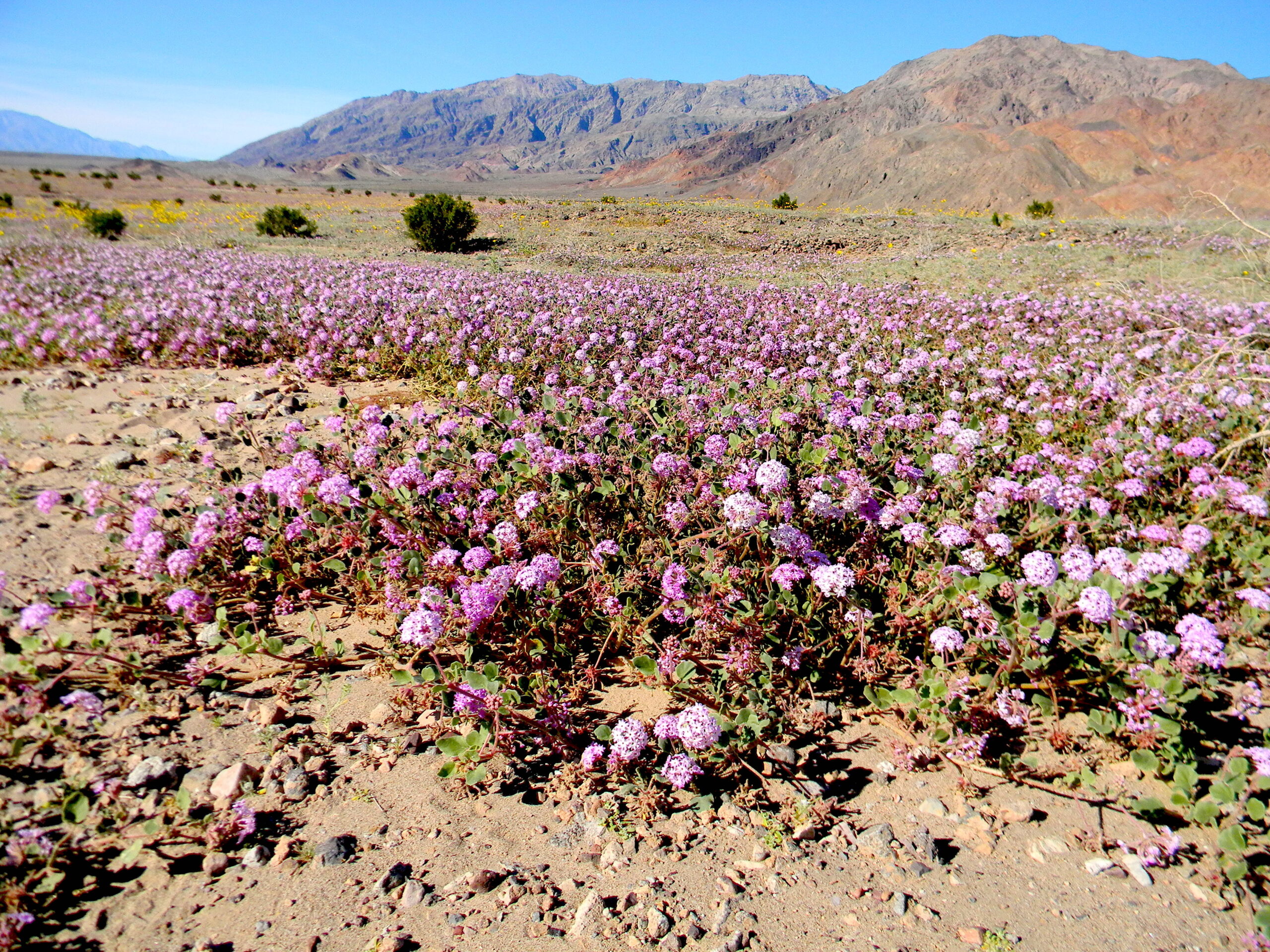
Feb 22 2026, David Reports: These were shot 3/22/2026 near Ashford Mills.

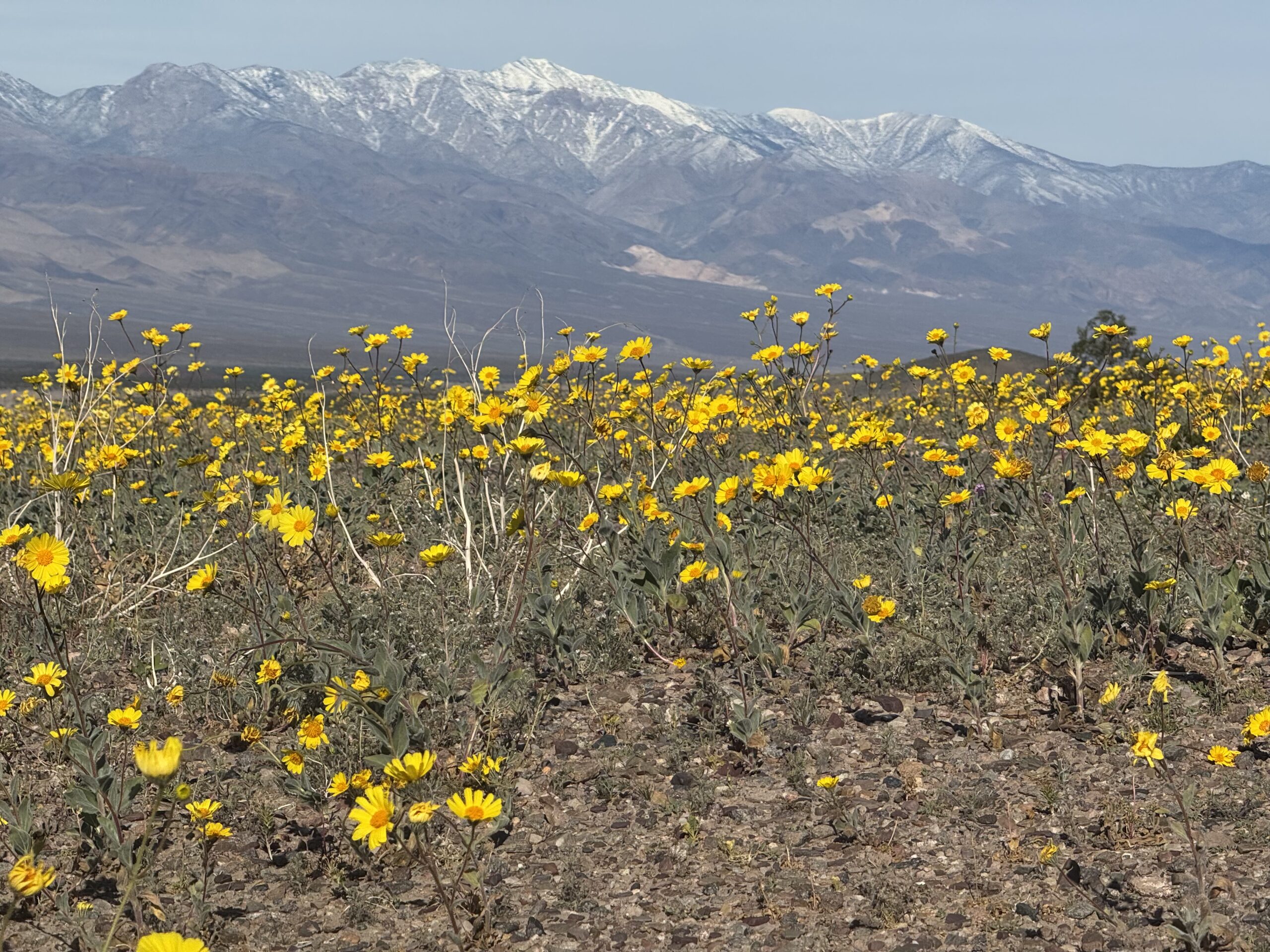
Feb 17 2026, Gigi Fernandez Reports: Photos taken February 14 at the Furnace Creek area. Lots of suncups, brown-eyed primroses, and hairy desert sunflowers. I anticipate a larger bloom in the following months with the coming rains.

Feb 15 2026, DUSA Reports: More rain is forecast for the area. This should get things going.
Feb 11 2026, Death Valley Reports: We are having a good bloom year. Sprouts have been spotted in many areas of the park, including washes and on hillsides. Low-elevation flowers have started blooming and will likely persist until mid-late March, depending on the weather. Higher elevations will have blooms April-June.
Current Bloom Locations:
North Highway: Phacelia, Desert Gold, Suncups
South Badwater Rd (near Ashford Mill): Desert Gold, Sand Verbena, Five Spot, Brown-eyed Primrose
Highway 190 (between Stovepipe Wells and Furnace Creek): Brown-eyed Primrose, Phacelia, Desert Gold, Mojave Desert Star
Feb 09 2026, DUSA Reports: An early bloom photo from the Basin & Range Watch Facebook post looks like it could be a good year in Death Valley.

Feb 06, 2026, Death Valley National Park Reports: We expect a strong bloom year. Sprouts have been spotted in many areas of the park, including washes and on hillsides. Some isolated flowers have started blooming. Brown-eyed primrose is blooming along Highway 190 between the junctions with Beatty Cut-off and North Highway. Low-elevation flowers will likely bloom Feb-March and higher elevations will have blooms April-June.
01/04/2026 DUSA Reports: Recent precipitation patterns across the desert interior, including Death Valley, are now above typical seasonal norms in many locales — a rare but encouraging sign for wildflowers. Death Valley has an extremely low average annual rainfall (≈2.36 inches) under normal conditions, so any widespread rain is significant for biological activity.
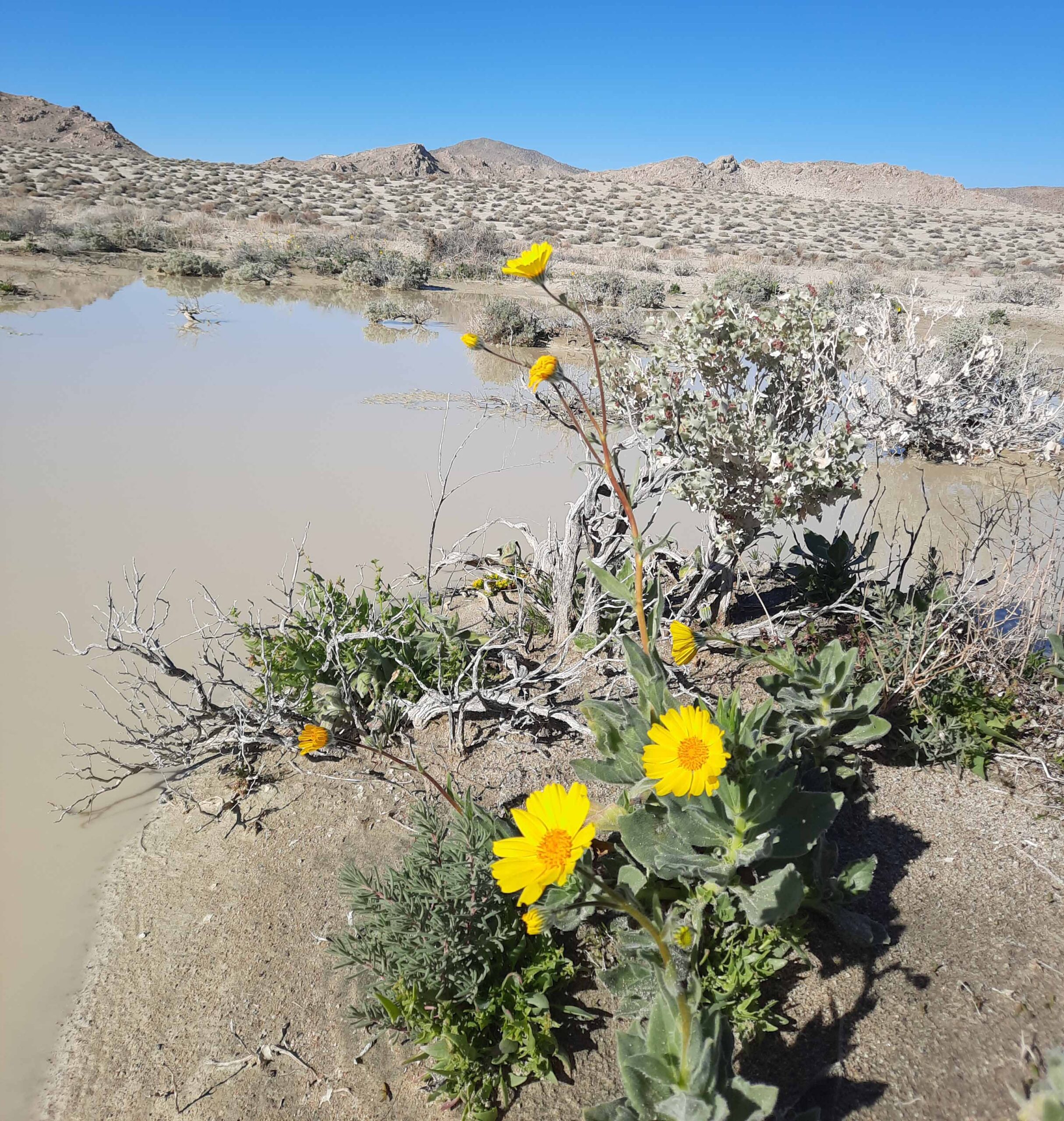
Jan 01, 2026 Angelo Reports: Plenty of large Hairy Desert Sunflower specimens along HWY178, East of Poison Canyon, near Searles Valley. Date 12/12/2025
Share Your Wildflower Photos & Reports for Death Valley with DesertUSA
Please share your wildflower pictures for Death Valley wildflowers, including the date and location. We will post your photos on our Wildflower Reports page, so others can learn where and when to view the spectacular displays.
- E-mail your digital photos and reports to Jim@desertusa.com. Use Wildflower Report as the subject of your e-mail. Let us know where you took the image, the date, and how you would like us to give you photo credit (first name, etc.)
- Text your photos to 760-740-1787. Be sure to include the location and the name you want to be credited for the photos.
Note: Spring is one of the most beautiful times of the year in the desert, but it can also be a time for caution. Rattlesnakes lie dormant during the cold fall and winter months and awaken from hibernation in the warm months of March and April. Another reason to stay on the trails. More…
Maps and more information on where to stay and what to see in Death Valley
Photos tips: Most digital point-and-shoot cameras have a macro function – usually symbolized by the icon of a little flower. When you turn on that function, you allow your camera to get closer to the subject, looking into a flower for example. Or getting up close and personal with a bug. More on desert photography.
Mojave Desert Wildflowers – This book is the standard by which all other wildflower books are measured. The author, Jon Mark Stewart, has combined super photography with concise information. This book has an entire color page for each wildflower covered, with a discussion of the wildflower. 210 pages with 200 color photos. More…
Desert Wildflowers and Plants Field Guide Kindle Edition
Other DesertUSA Resources
Wildflower Information & Hotlines