Desert Wildflowers Joshua Tree NP
Southern California Wildflowers | Back to Main Wildflower Page
Arizona| California| Nevada| New Mexico| Texas
Wildflower Field Guide
Plan your trip with our Joshua Tree NP Introduction Package
We'd like to see your pictures too. E-mail your digital photos and reports to Jim@desertusa.com. Use Wildflower Report as the subject of your e-mail. Let us know where you took the photo and the date.
______________________________________________________________________
May 9, 2012 Barb reports: We entered the park from the south entrance and exited from the west entrance.

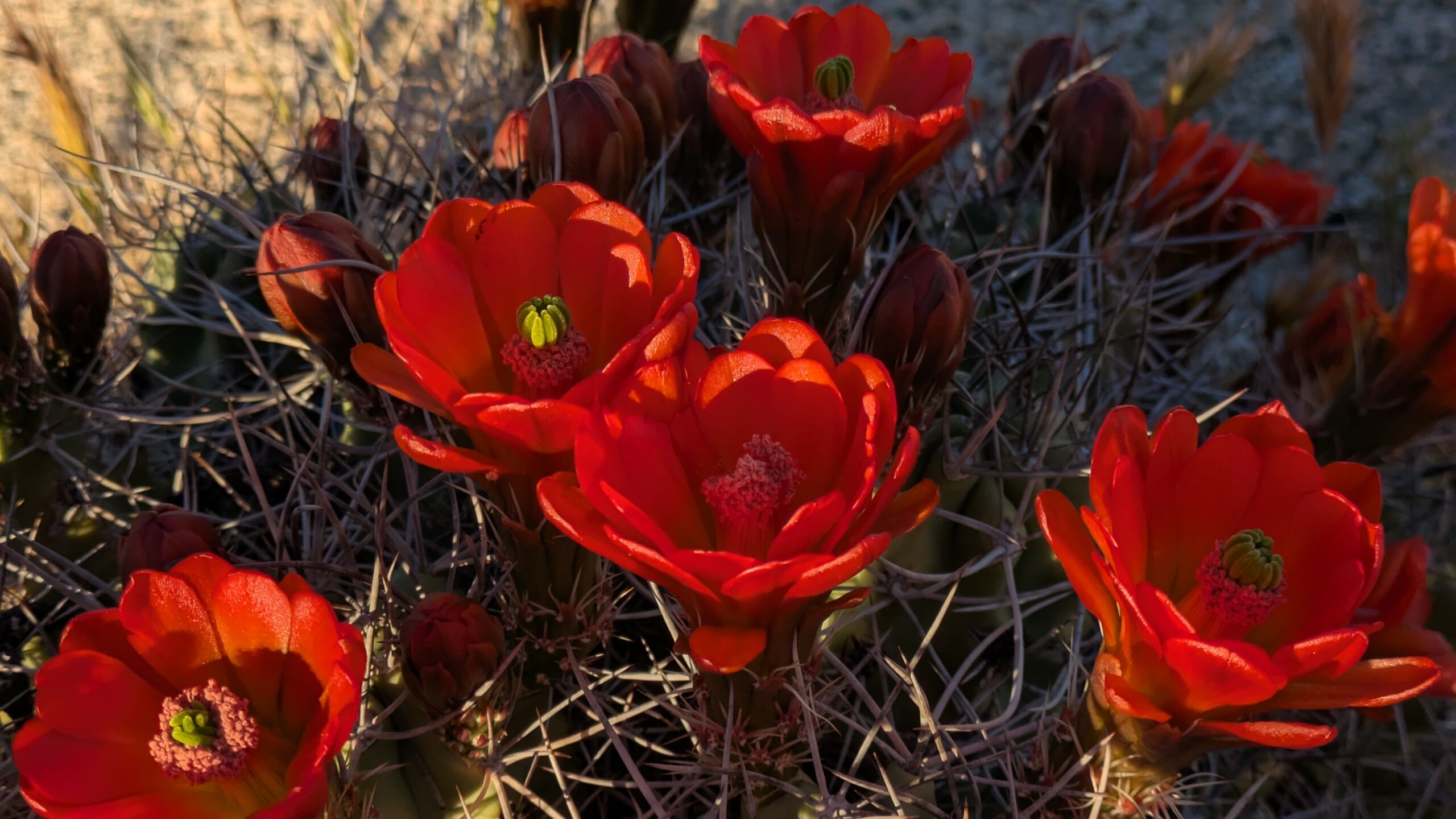
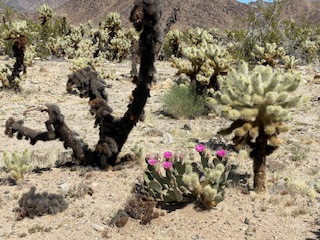
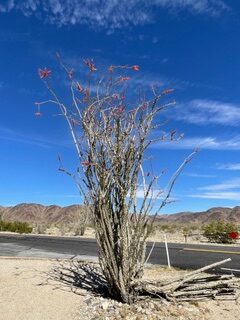
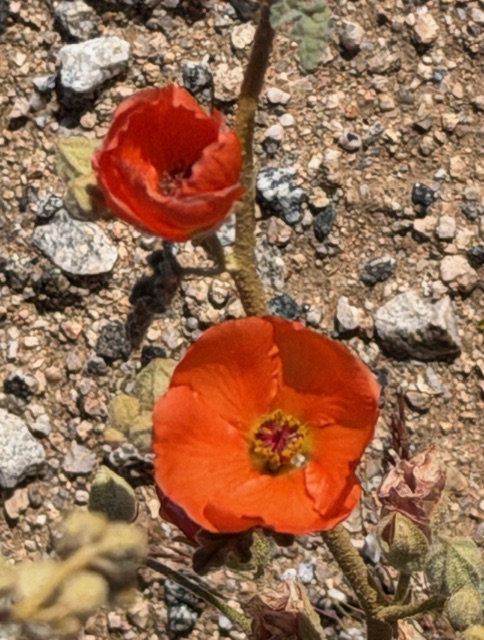
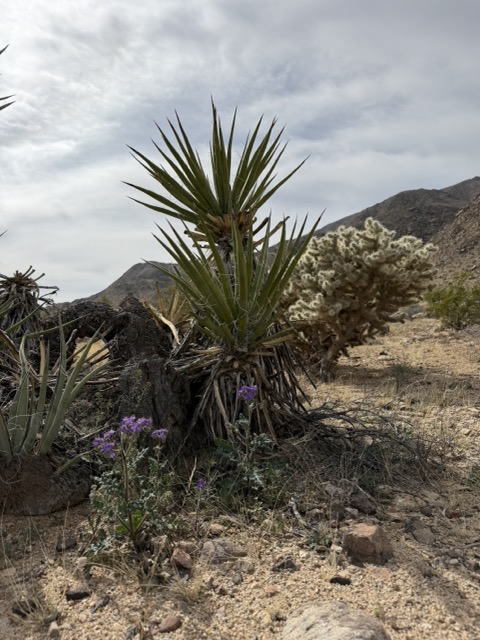
This beauty was right in the middle of the Ocotillo garden on the road in the transition zone. All sorts of cactus are blooming near the rocks along the walk at Cap Rock. Throughout the park, wild flowers line the roads and hiking paths.


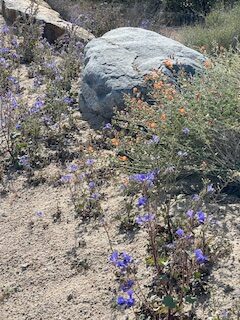
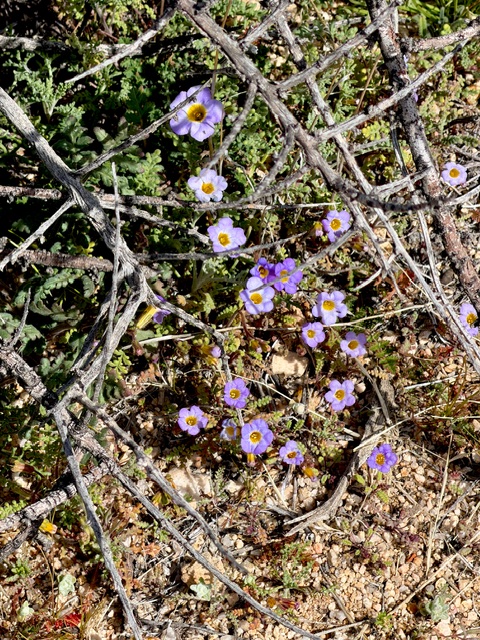
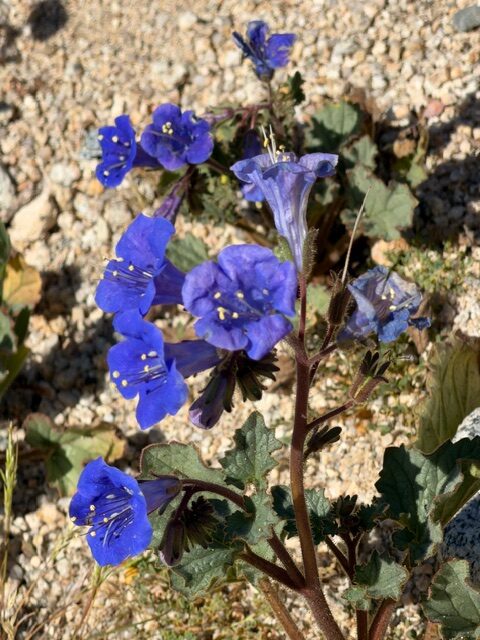
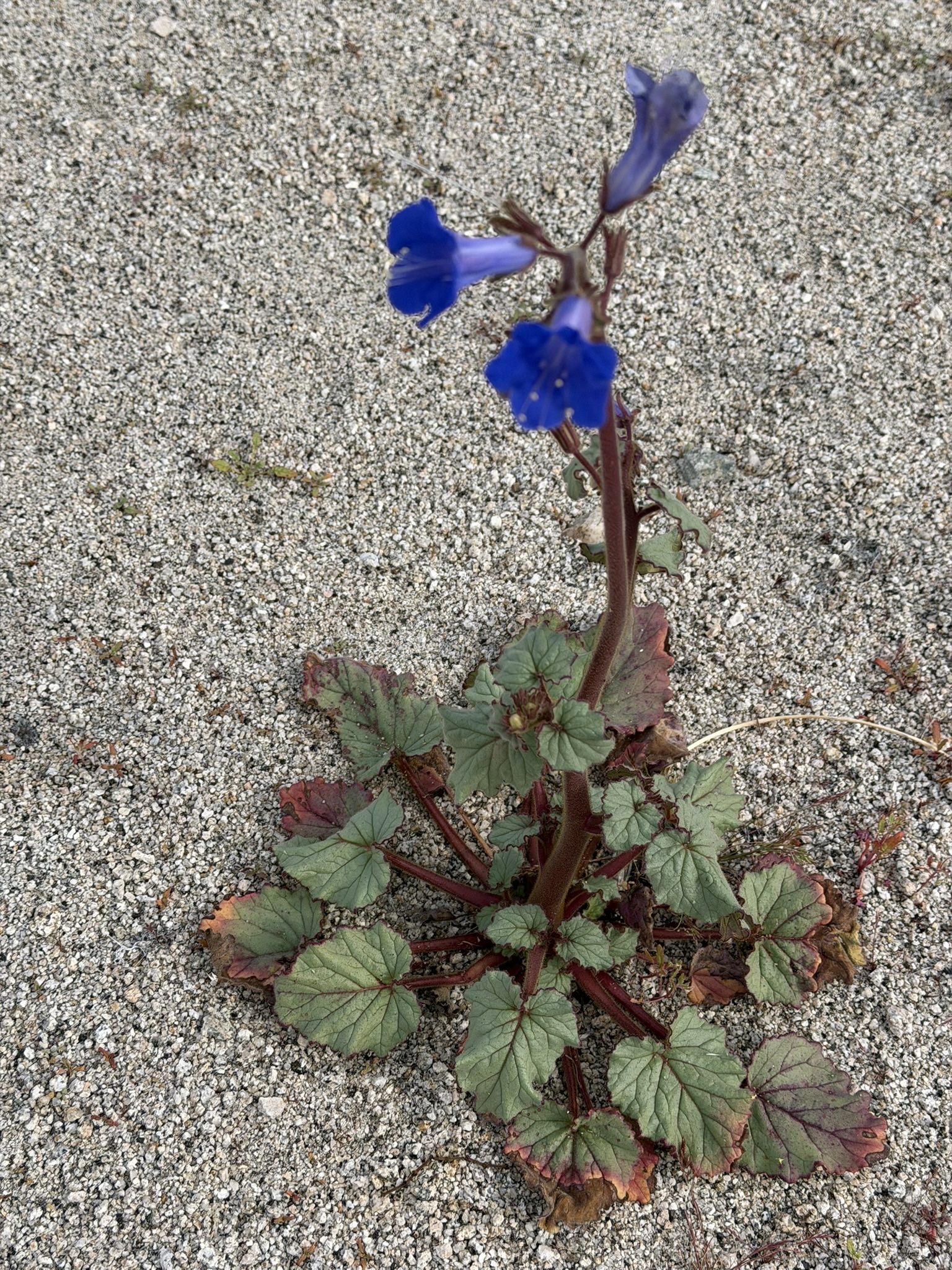
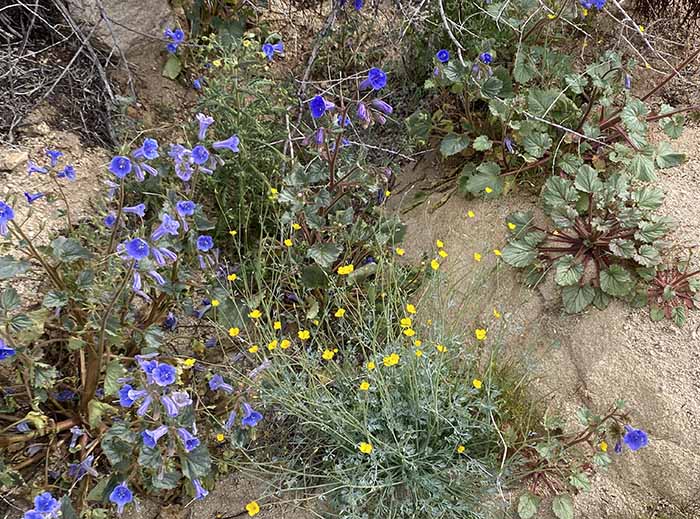
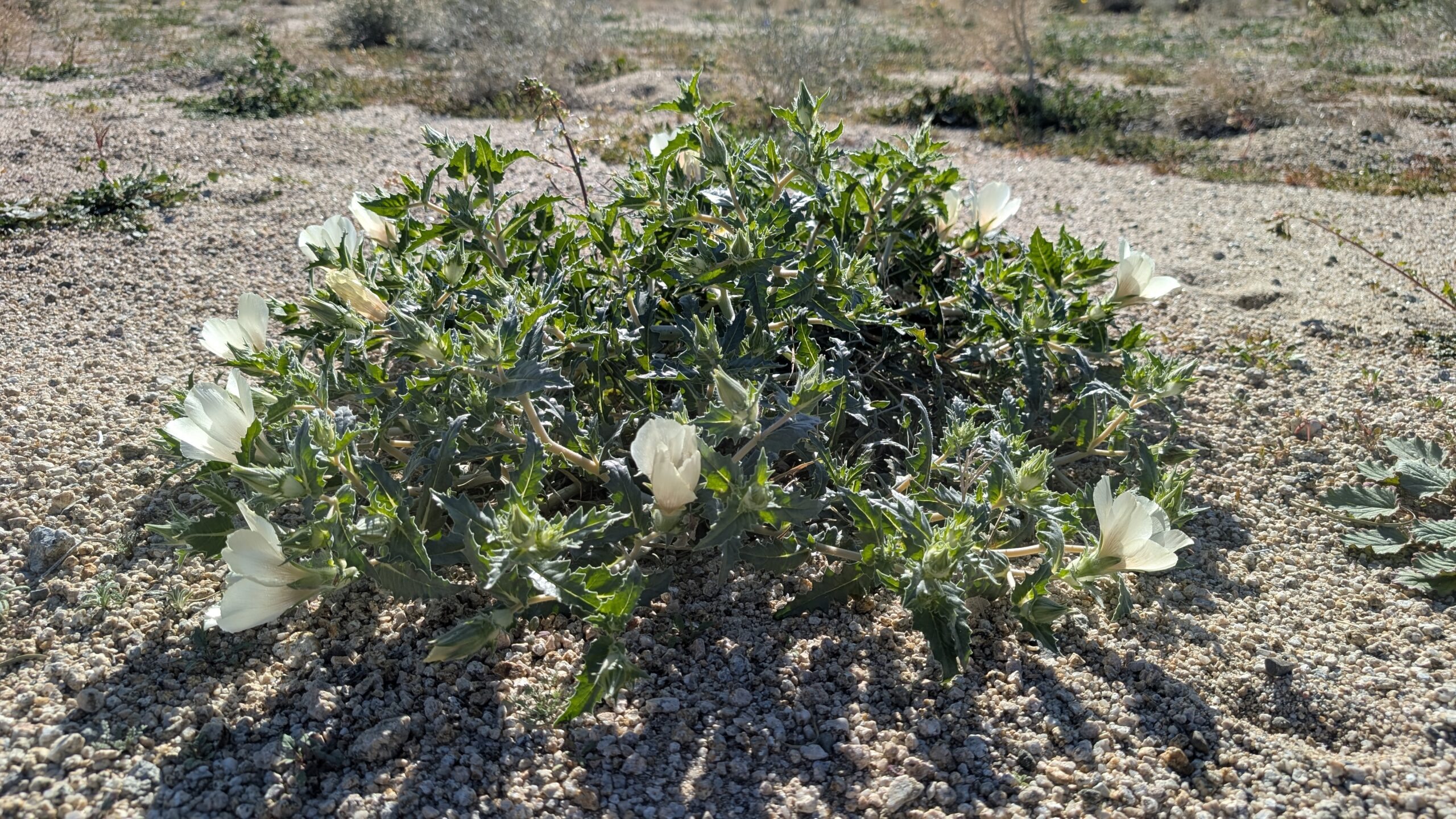
Apr 24, 2012 Tomoe reports: My husband and I went to Joshua Tree National Park on April 21st and 22nd. At the Cottonwood Spring area, there were many Sand blazing star, Canterbury bell and Desert Chia. At the temperature almost 100 degree, some Sand blazing star was opening completely. I took these pictures there.


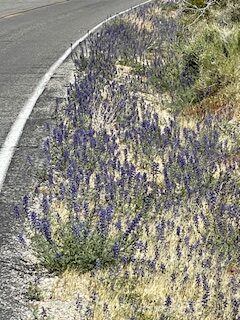
Apr 24, 2012 Karen reports: I went to Joshua Tree for the first time this weekend. With our lack of rainfall, I didn't expect to see much in the way of flowers but I saw quite a few. I didn't venture far from the road. These were on the Pinto Basin Road driving from Twentynine Palms to Cottonwood this morning.


Apr 21, 2012 Joshua Tree reports: In the south of the park, the Mastodon Peak Trail continues to delight, with cacti, Mohave asters and rock live- forever replacing the Canterbury bells and brown-eye evening primroses. Sand blazing star is still going strong and Sylvia’s Wash, 2.7 miles south of Cottonwood Visitor Center, is an excellent wildflower stop.
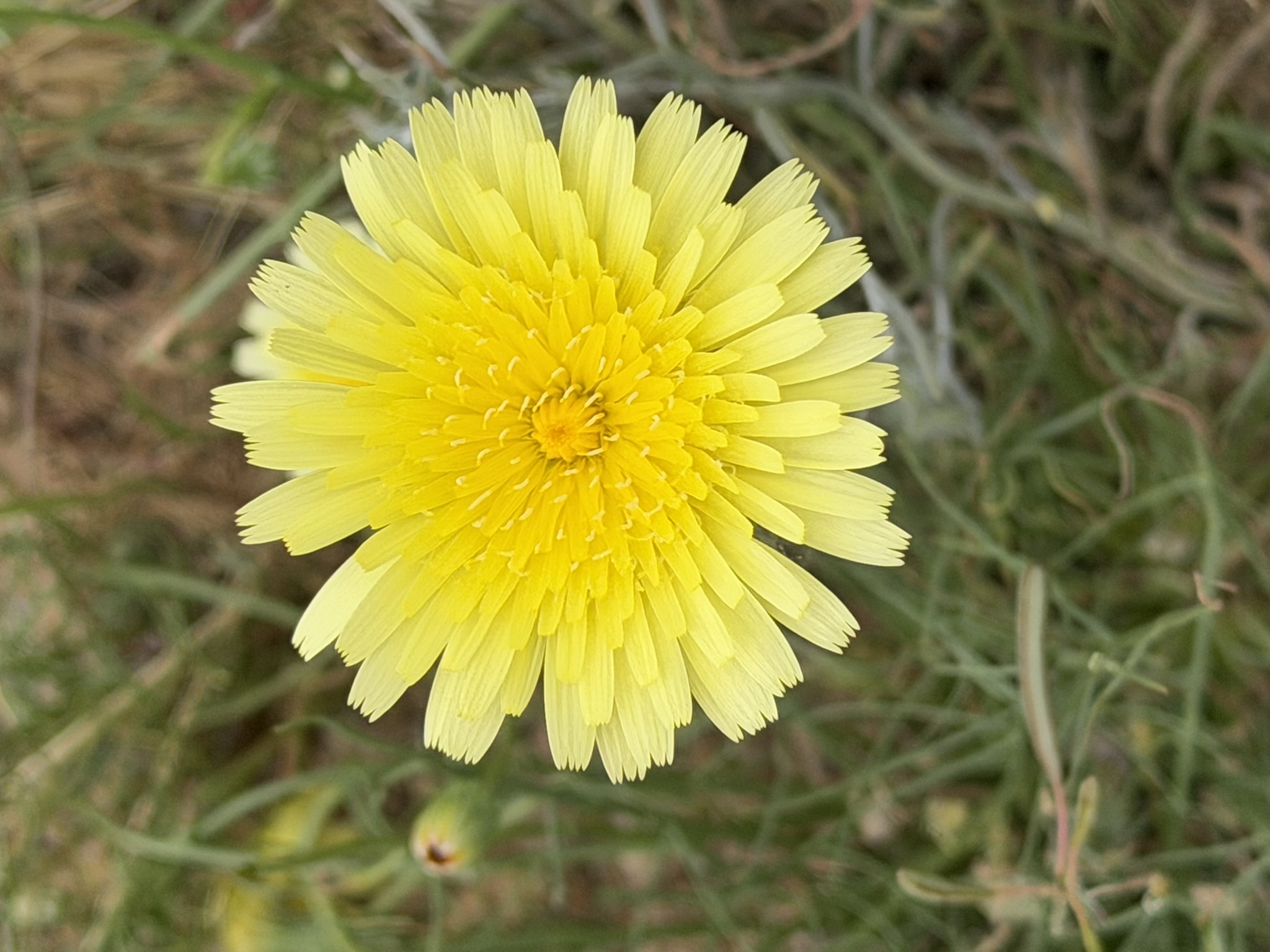
Apr 12, 2012 Mary reports: The first part of the Mastodon Peak Trail is one of the prettiest displays of desert flowers I have seen. The draws going up from the trail are packed with Desert Blazing Star, Canterbury Bells, Primroses and Chia. The poppy fields north of I-10 are in full force and include on close look Yellow Head, Whispering Bells, Spanish Needles and Thick Leaved Ground Cherry. Last year I could not find a Ground Cherry anywhere, and this year they were easy to spot. On an excellent wildflower walk with Ranger Julia in Cottonwood wash we identified 30+ species of blooming plants including Star Gilia and the succulent Rock Live Forever.
Other than this area around the Cottonwood Visitor Center, I only saw a few scattered roadside blooms in the very dry looking park desert. The park ranger told us that this area of the park received the three inch downpour in September and another inch in February. It is interesting how this rain pattern resulted in three feet tall Canterbury Bells, three feet wide Desert Blazing Star and thousand of Chia, while park regulars such as Desert Dandelion and Lupine are sparse and smaller than usual. Fortunate to have this diverse pocket of flowers in an overall dry year.


Apr 10, 2012 Lynn reports: Tooks these pictures on 4/9/12 in the Cottonwood area.


Apr 9, 2012 John reports: Wildflower pics that I took on March 31st in the Cottonwood Spring area of Joshua Tree NP.


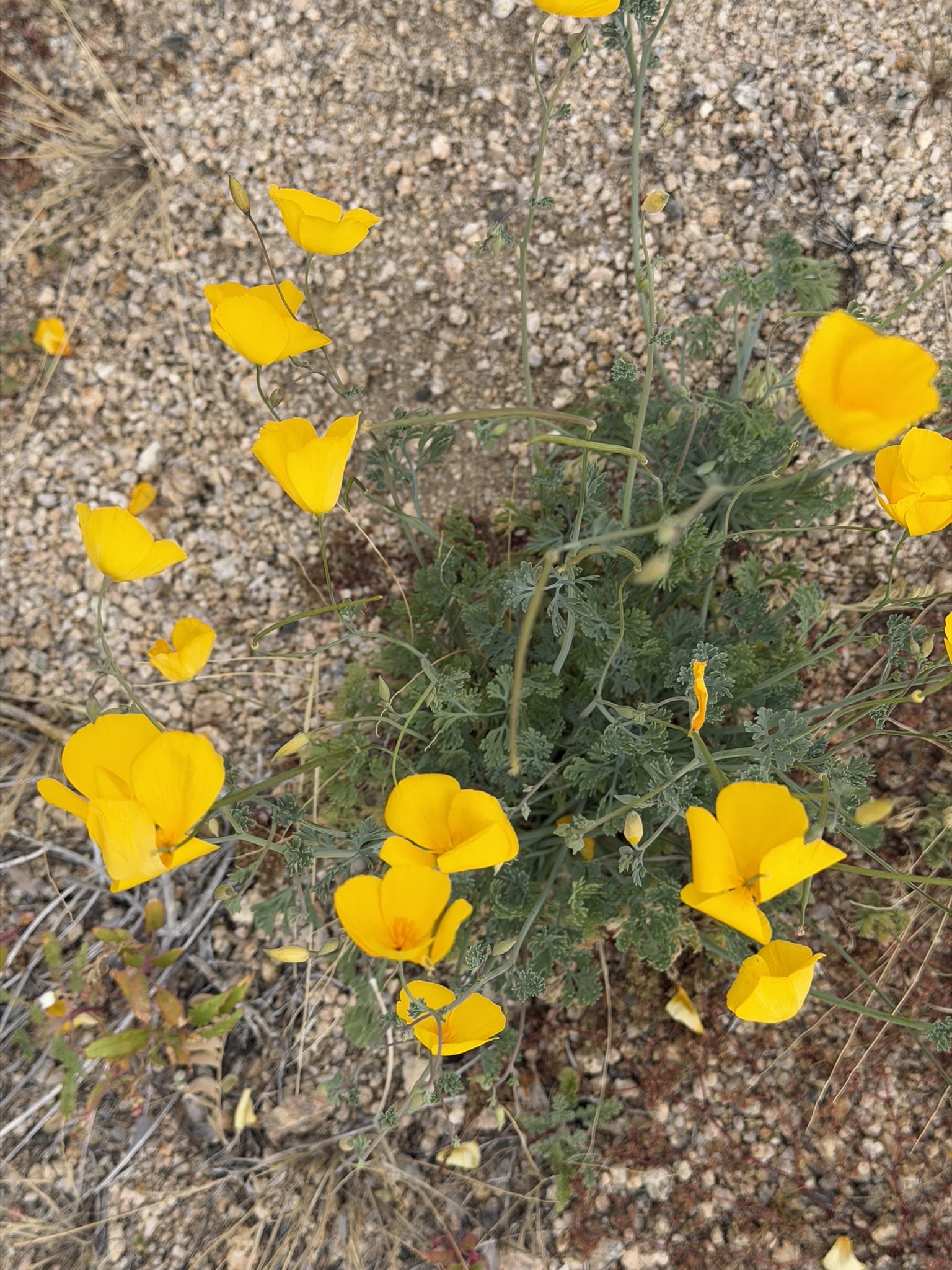
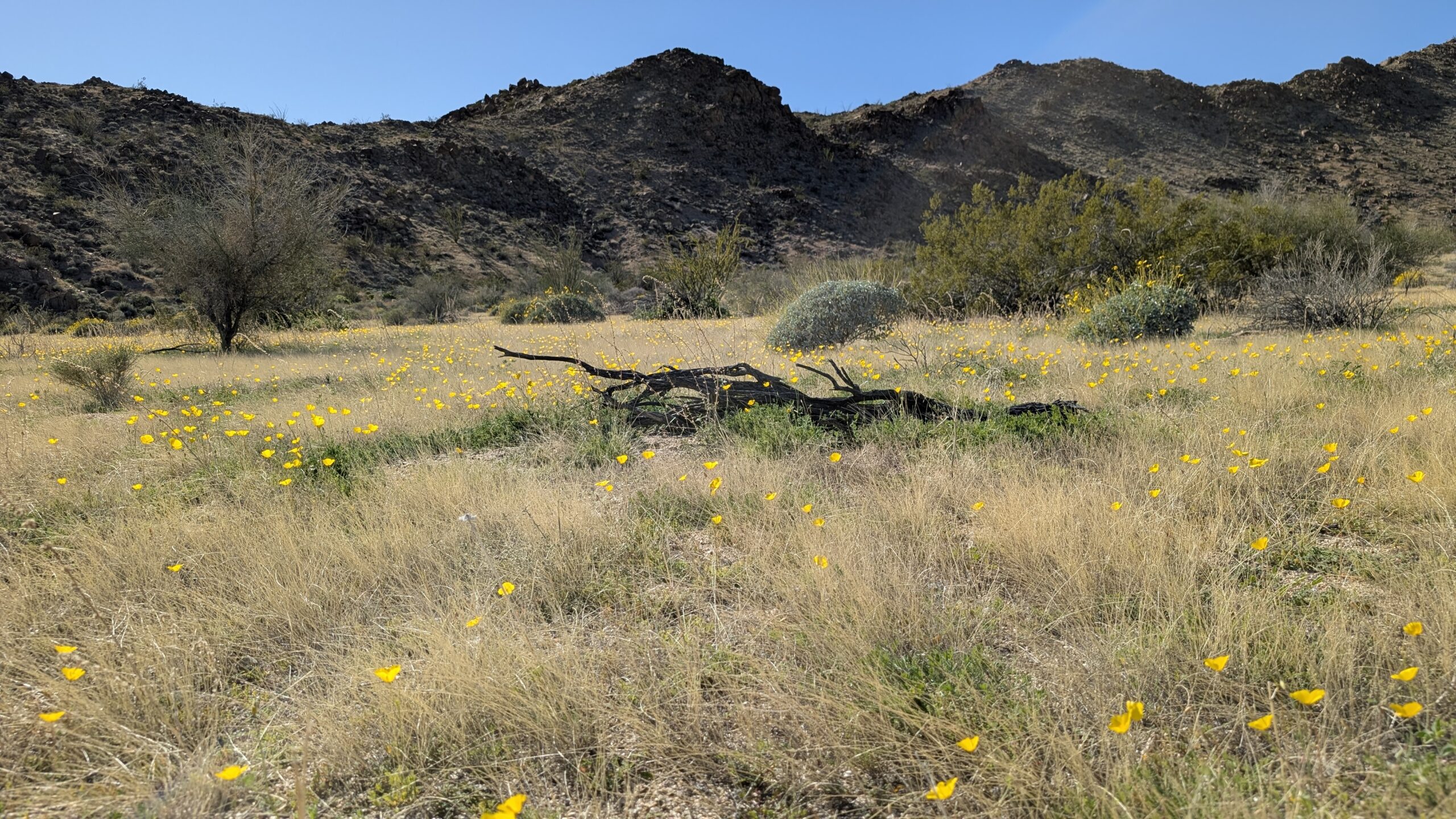
Apr 9, 2012 Paul reports: On the west side of the road to Cottonwood Station between the road and the wash, poppies were in bloom as of 4/7/12. In the wash itself is a good place to find some nice blooms of Canterbury Bells as others have reported.

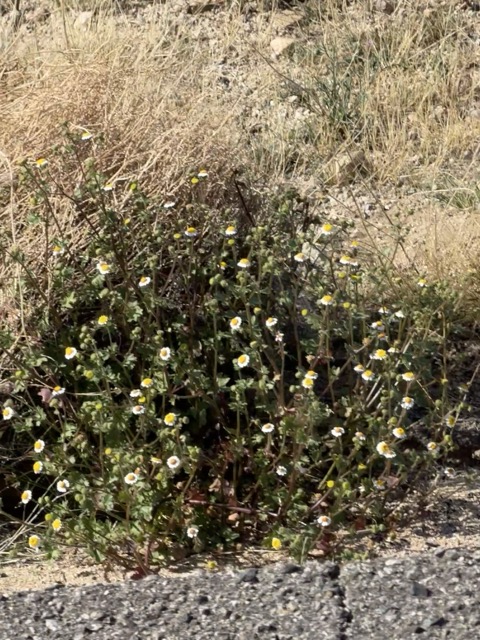
Apr 9, 2012 Walt reports: We took these pictures 4/7/2012 on the Mastodon Peak trail (near Cottonwood Srpings) at Joshua Tree National Park. Following the loop trail, about 2 1/2 miles, you can see about 30 differnt varieties of wildflowers and maybe a chuckwalla too if you are lucky. Between the freeway and CottonwoodSsprings in the wash, there are also a lot of flowers and some spots are almost carpets of coreopsis (at least I think that is what they are). The flowers won't last more than a week or two as it is warming up fast.


Apr 6, 2012 Jan reports: We visited Joshua Tree on Mar. 31 and altho very few wildflowers were blooming there were more there then any of the other southern Ca. locations at this time, and we have searched out them all. All of these were taken about a mile south of the Cottonwood Station entrance between the main hwy. and the station. The washes are where you will find the most. I would imagine now after a week they should be peaking. Please be on the watch for rattlesnakes as we saw two sidewinders.


Apr 6, 2012 Ward reports: Indian Cove April 1st

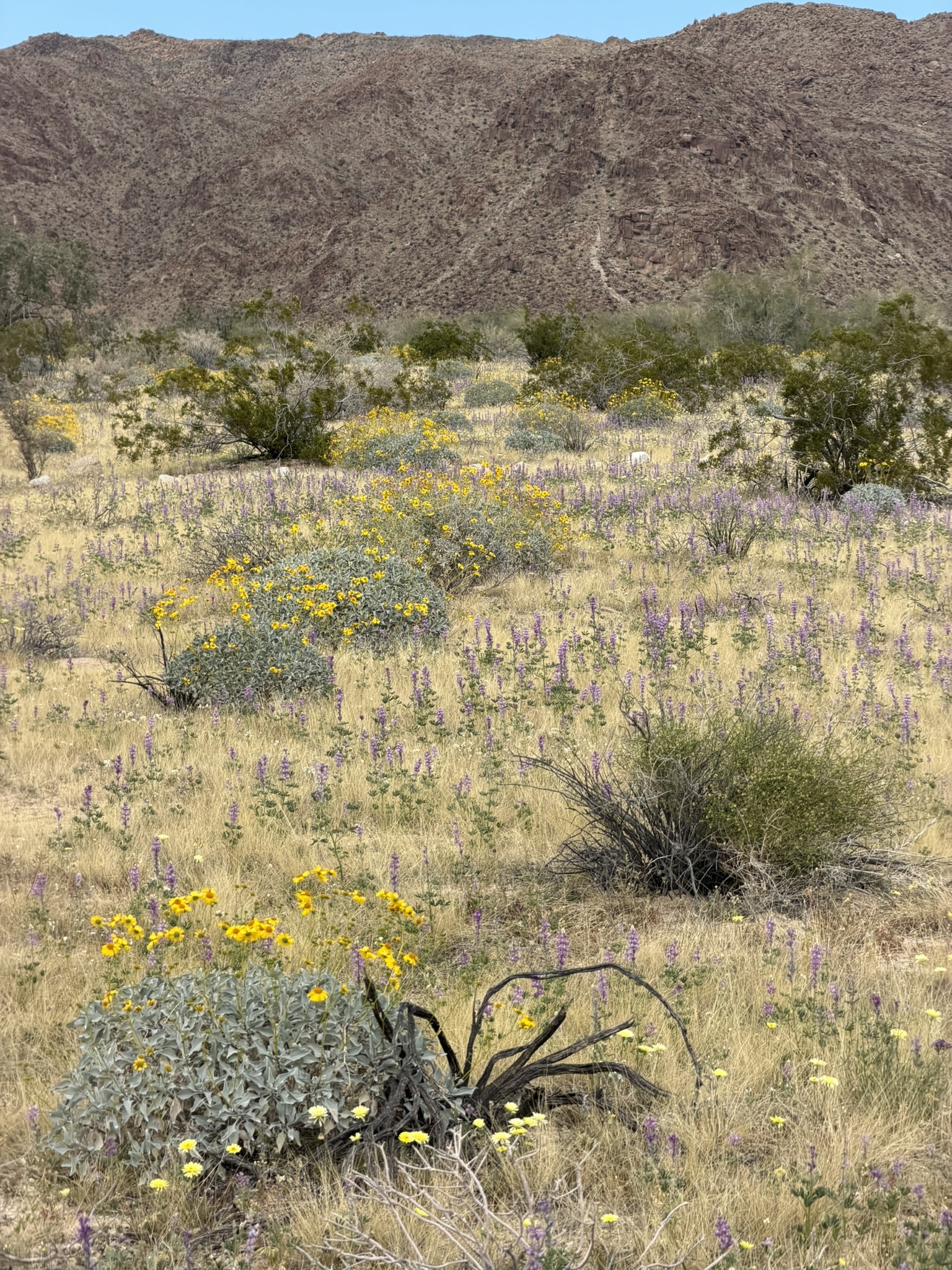
Mar 30, 2012 Laurie reports: This years crop of flowers aren't quite peaking yet but up near the wash two miles south of Cottonwood Springs Visitor it is starting to get good. Nothing down below closer to the highway yet, where in years past there has been an explosion of color. Photo taken on the 3/25/2012.


Mar 28, 2012 Joshua Tree reports: The wildflower bloom is now at its peak in the southern area of the park. Hike the Mastodon Peak trail or stop safely along the road south of Cottonwood Visitor Center and walk into the washes for nice displays. The southern margin of the Cottonwood Mountains is an excellent wildflower area for those willing to walk a ways into the desert.
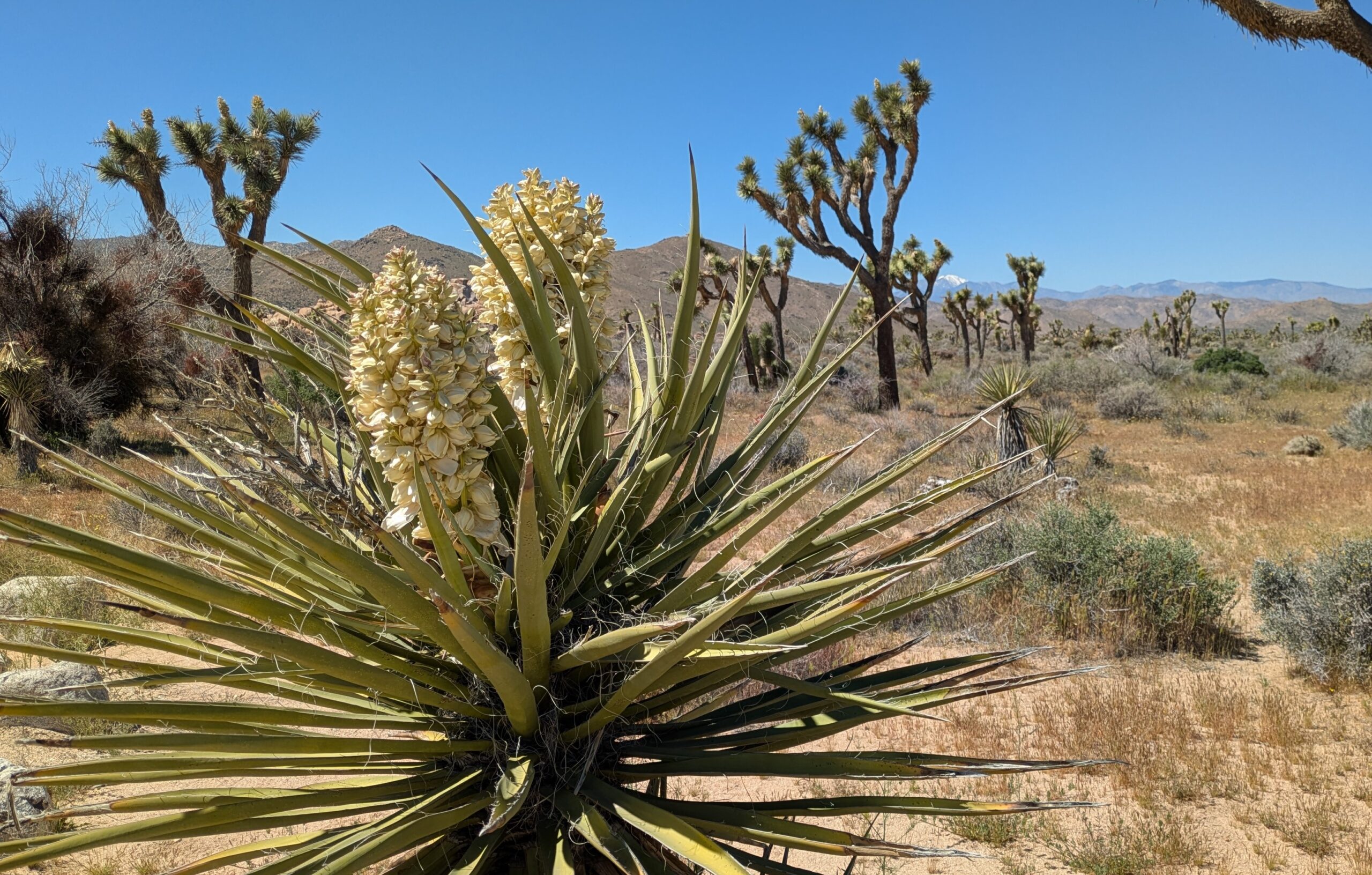
Further north, Smoke Tree Wash, at mile-marker 33.7 on Pinto Basin Road, is a good pullout for wildflower viewing right beside the road. A few Mojave yuccas are blooming along the road in Pinto Basin and Wilson Canyon, and Joshua trees are blooming in the northern and western parts of the park.
Mar 25, 2012 George reports: Wash two miles south of Cottonwood Springs Visitor Center on Friday March 16, 2012 Flower: Canterbury Bell (blooming profusely throughout the washes and up into the Lost Palms Oasis trail)

Mar 23, 2012 Joshua Tree reports: Wildflowers are at their peak south of Cottonwood VC. Park and walk into the washes for the best displays.
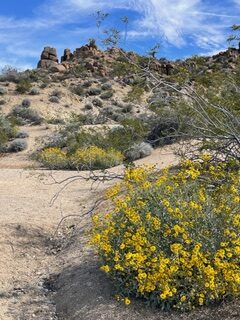
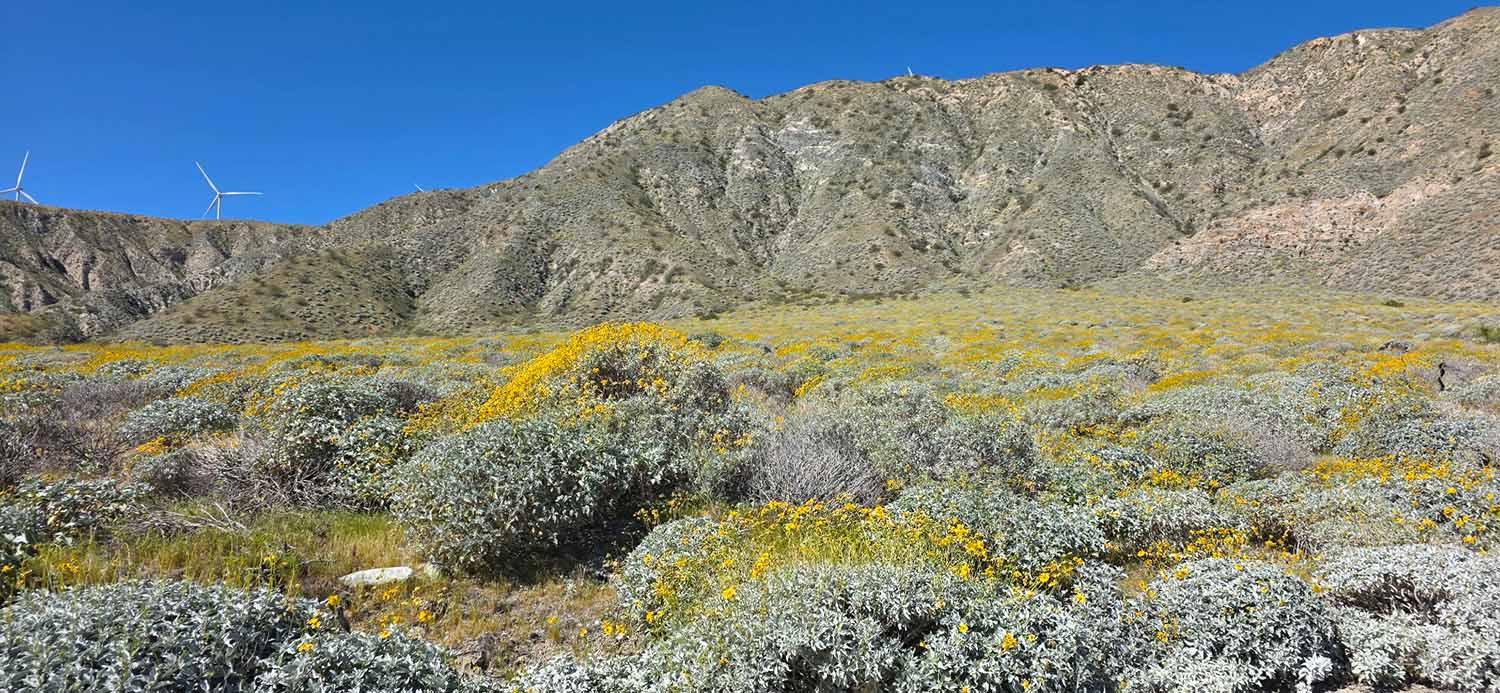
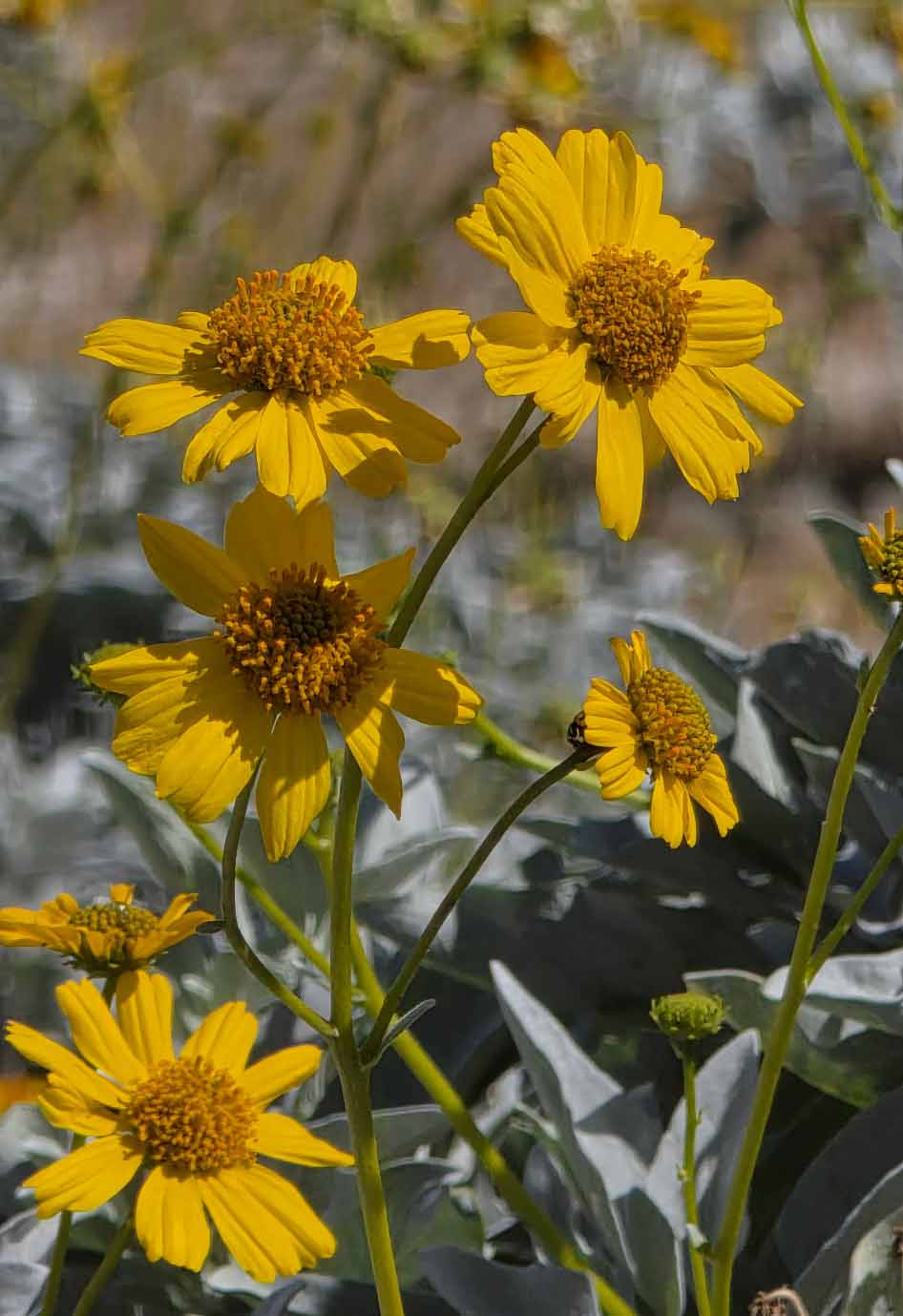
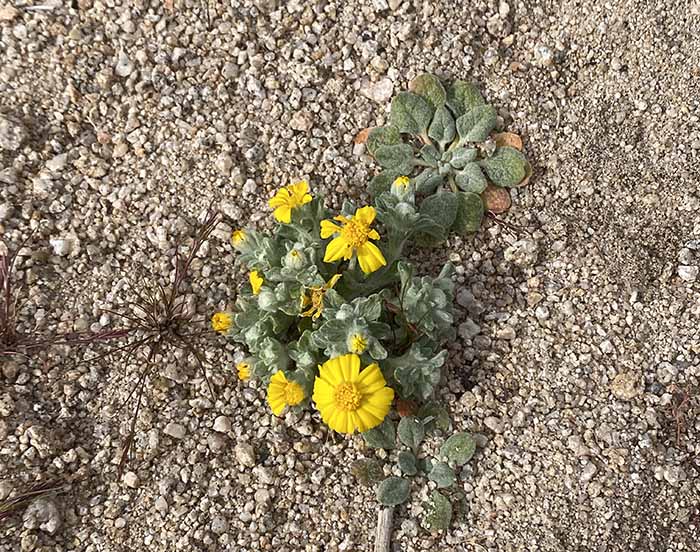
Mar 22, 2012 Joshua Tree reports: Red chuparosa, yellow brittle bush, purple chia and many other species may be seen on both sides of the road between the park’s southern boundary and Cottonwood Visitor Center. Park safely in a pullout to explore and enjoy the flowers. Beavertail cactus are beginning to bloom on the Bajada Nature Trail and Mastodon Peak Trail continues to offer a nice selection of blooms. If you don’t have time for the full three-mile loop, it’s well worth walking just half a mile from the trailhead—in either direction.
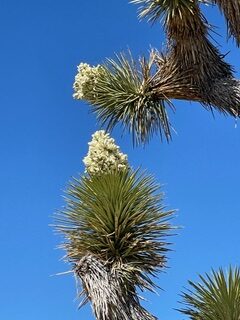
Further north, yellow tickseed (Coreopsis) is carpeting parts of Wilson Canyon, south of White Tank Campground, and the large, cream-colored blooms of Joshua trees can be seen at Black Rock, along Park Boulevard and at Keys View.
Mar 20, 2012 DUSA reports: The southern part of the park got the most rain and it may help the few wildflowers that are there now.
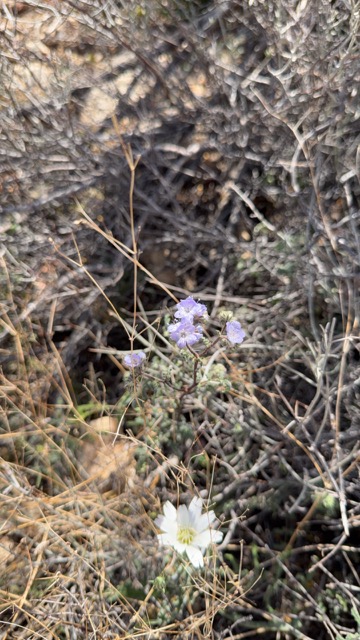
Mar 17, 2012 Jonathan reports: These photos were taken on 3/15/12 at the South Entrance to Joshua Tree at the turn out closest to the top of the first ascent before the road begins to twist and turn. They are on the right side of the road. I'm sorry that I don't know the names of the plants and flowers.


Mar 13, 2012 Joshua Tree reports: Joshua trees are flowering at Black Rock, along the western part of Park Boulevard, and at Keys View. Cottonwood Basin Wash, on the western side of the road, 1.7 miles south of the Cottonwood Visitor Center has a nice display of red flowering chuparosa. Park near the entrance to the service road, without blocking the gate, and walk into the wash. Further north, yellow carpets of tickseed can be seen in Wilson Canyon, which is located south of White Tank Campground.
The southern, Cottonwood, area of the park is still the best place for wildflower seekers and Mastodon Peak, a three- mile moderate loop, starting from Cottonwood Spring is recommended for "flower hikers."
Mar 11, 2012 DUSA reports: The southern Cottonwood area of Joshua Tree National Park is still the best location to find some wildflowers this year.
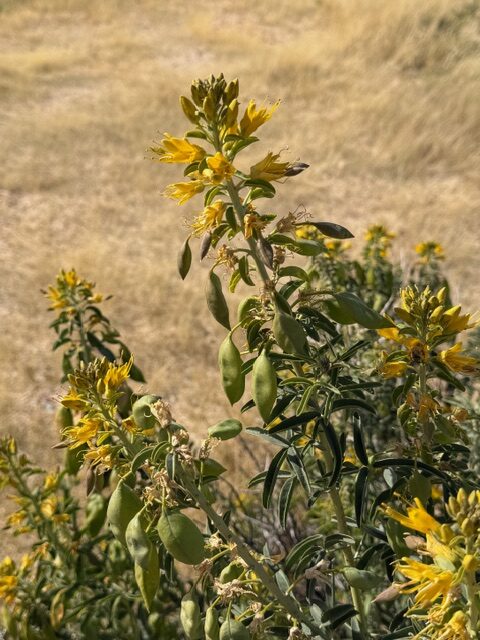
Mar 2, 2012 DUSA reports: Drove through the northern part of Joshua Tree NP, very dry looking with a few wildflower.s Too early for this part of the park. The park reports the following. Early flowers are blooming in the southern area of the park, between the Bajada Nature Trail and Cottonwood Visitor Center, and beginning to spread into the Pinto Basin. Red chuparosa and yellow bladderpod flowers are visible along the road in this area, and many other species may be seen in the washes. The translucent white flowers of desert blazing star are especially abundant.
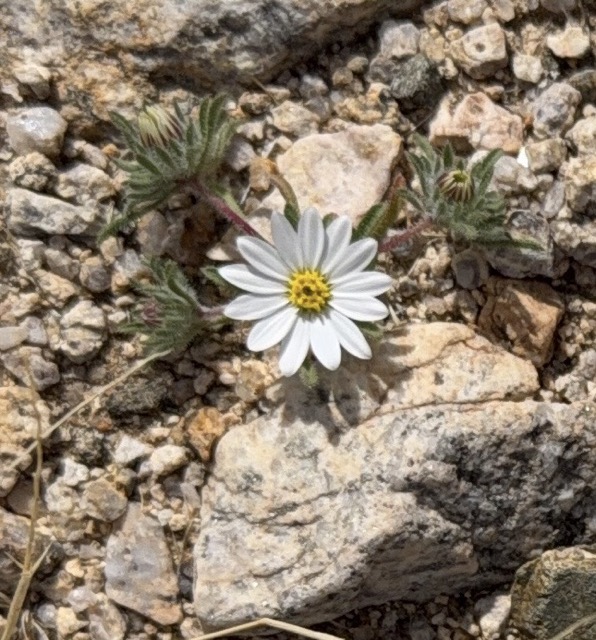
Feb 25, 2012 Kirt reports: South Joshua Tree, Eagle Mountains, hike up wash to Carey's Castle - same as earlier reports - scattered individuals in bloom, no carpets of color but worth getting out for a look. Saw several dozen species in flower. Most numerous annuals were Canterbury bells, sand blazing star, rock daisy and chia. Individual plants of Canterbury bells were impressive. Desert lavender is in full bloom along the course of the wash until it drops out higher up. Bladder pod, trixis, pygmy cedar, desert mallow, ground cherry and a little brittlebush and golden-eye. Desert rock pea, Fremont perppergrass and California buckwheat higher up in the canyon. Sweet scent of desert star vine and desert mistletoe in the air.
The generally ubiquitous species of desert forget-me-not (Cryptantha) seemed to be in short supply. Other annuals present but in short supply - desert gold poppy, sun cups, whispering bells, tansy mustard, fiddlenecks, wild heliotrope, desert lupine (Lupinus sparsiflorus). Only saw a couple of Arizona lupine which can be so dominant in this area and saw none of the belly flowers purple mat, desert star or Bigelow's monkey flower.

Feb 17, 2012 Joshua Tree reports: Up to 12 inches of snow accumulated in the park on February 15. With the arrival of a cold front last night that brought up to 12 inches of snow in some areas, several park roads were closed for visitor safety while snow removal is in progress.
The roads closed include Park Boulevard from Jumbo Rocks Campground to West Entrance and the roads that are accessed from the closed portion of Park Boulevard, including Keys View Road. In addition all roads in the Covington Flats area are closed.
These roads will remain closed Thursday night, February 16. On Friday, park rangers will determine if Park Boulevard and other roads are safe for visitors to use during the upcoming President's Day holiday weekend.
Pinto Basin Road is fully open and visitors can travel between Interstate 10 and Twentynine Palms. All visitor centers are open as are Belle, White Tank, Black Rock, Cottonwood,and Indian Cove campgrounds.
The National Weather Service forecast for today is scattered showers with wind gusts up to 33 mph and temperatures near 65 degrees. The forecast for today calls for sunny conditions and a high near 68 degrees.

Feb 15, 2012 DUSA reports: Some rainand snow in the park. The park has reported this "September rain and warm winter nights have resulted in some early blooms in the southern part of the park. Visitors who venture into the washes along the road south of Cottonwood Visitor Center will find Canterbury bells, sand blazing star, chuparosa, rock daisies, brittlebush, and many others. However, don’t expect to find large numbers of blooms or carpets of color since most of the more than 60 species currently flowering are represented by just a few, scattered blooms."
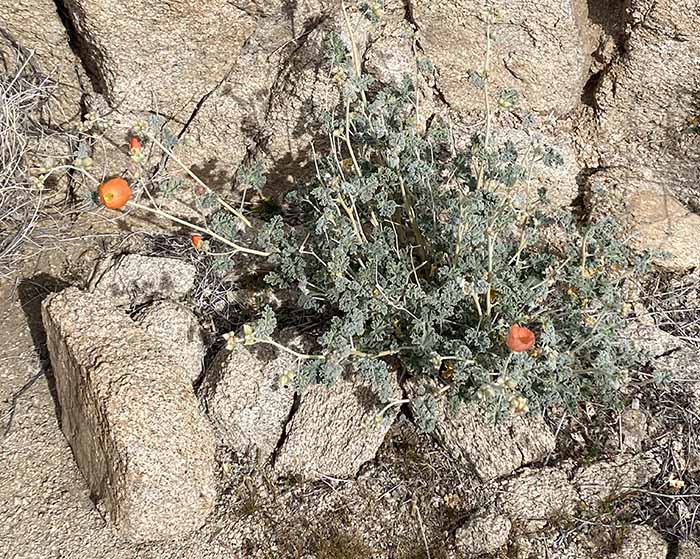
Feb 10, 2012 Lynn reports: On the southern end of Joshua Tree National Park there are a few wildflowers blooming this week. Canterberry bluebells, apricot globe mallow, brittlebush and ghost flowers are the most common flowers blooming right now. They are sparse, but can be seen along the mountain ranges, washes and some of the hiking trails. There were also some chuparosa blooming in near the base of the mountains on the drive in from I-10 to the Cottonwood Visitor's Center. The Mastodon Peak hike that starts at Cottonwood Spring is where these photos were taken.


Jan 23, 2012 DUSA reports: Cottonwood campground is scheduled to reopen on February 17. Cottonwood Spring and some trails remain closed. Rain in forcast for today.
Nov 12, 2011 DUSA reports: More rain in Joshua Tree Park today.
Joshua Tree National Park reopened Pinto Basin Road for visitor use on November 1st. Cottonwood Visitor Center is once again open to welcome visitors. Cottonwood Campground and Cottonwood Spring Oasis will remain closed as repairs to the campground and area trails have not yet been completed.
Pinto Basin Road has been closed since September 13 due to flash flood damage caused by approximately three inches of rain that fell in the area during a torrential rainstorm. The road is open for two-lane travel along its entire length, however, there remain several short unpaved sections where travelers should reduce speeds and exercise caution.
Spring Blooming Periods
Lower Elevations: 1,000 3,000 feet
YuccasMarch and April
AnnualsFebruary, March, and April
CactiMarch, April, and May
Higher Elevations: 3,000 5,000 feet
Joshua Trees and YuccasMarch and April
AnnualsMarch, April, and May
CactiApril, May, and June
When will the desert wildflowers bloom? We start our report in January, plan your visit to coincide with the peak of the bloom - keep up to date with DesertUSA's Wildflower Reports. Be sure to bookmark this page for weekly updates.
We'd like to see your pictures too. E-mail your digital photos and reports to Jim@desertusa.com. Use Wildflower Report as the subject of your e-mail. Let us know where you took the photo and the date. We will post them on our wildflower reports. Thanks for your support and photos.
DesertUSA Newsletter -- Each month we send articles on hiking, camping and places to explore. Animals, wildflower reports, plant information and much more. Sign up now (It's Free).
Mojave Desert Wildflowers - This book is the standard by which all other wildflower books are measured. The author, Jon Mark Stewart, has combined super photography with concise information. This book has an entire color page for each wildflower covered, with a discussion of the wildflower. 210 pages with 200 color photos. More...
Photos tips: Most digital point-and-shoot cameras have a macro function - usually symbolized by the icon of a little flower. When you turn on that function, you allow your camera to get closer to the subject, looking into a flower for example. Or getting up close and personal with a bug. More on desert photography.
We have an online wildflower field guide that is designed to help you identify desert wildflowers by color, scientific name, region and common name. The pictures are sized to work on the iPod, iPhone. iPad and similar devices. With your iPod or phone you will easily be able to identify wildflowers while in the desert. Links for downloads are on the bottom of the Wildflower Field Guide page.
For other state reports click on link below
Arizona| California| Nevada| New Mexico| Texas
Anza-Borrego DSP | Death Valley NP | Mojave NP
Southern California Wildflowers | Back
to Main Wildflower Page
Mojave Desert Wildflowers book 200 color photos
Other DesertUSA Resources
Desert Plants
Wildflower Information & Hotlines
When Will The Wildflowers Bloom?
Wildflower Intro. Packages
Books on Cacti, Wildflowers, & Other Flora
| THE DESERT ENVIRONMENT | |||
| The North American Deserts | |||
| Chihuahuan Desert | Great Basin Desert | Mojave Desert | Sonoran Desert |
| Glossary of Desert & Geological Term | |||
![]()
Plan your trip with our Joshua Tree NP Introduction Package
Past Wildflower Season - Videos
click on link below
2009 Wildflowers video
2006 Wildflower season. -
Click here to play.
2005 Wildflower Season -
Click here to play
Mojave Desert Wildflowers book
200 color photos
Wildflower field guide - find the flowers by color
Click here to see current desert temperatures!
DesertUSA is a comprehensive resource about the North American deserts and Southwest destinations. Learn about desert biomes while you discover how desert plants and animals learn to adapt to the harsh desert environment. Find travel information about national parks, state parks, BLM land, and Southwest cities and towns located in or near the desert regions of the United States. Access maps and information about the Sonoran Desert, Mojave Desert, Great Basin Desert, and Chihuahuan Desert.