
Timing is everything and it seems that the Right Stuff happened in The Right Place at the Right Time to create a very historical location in the Mojave Desert. This blog is mostly about the recent history of the Edwards Air Force Base with an accompanying map of points of interest. Some of these places can be explored in person, others you can explore from your computer.
Here is a link to the ESRI-GIS Story Map created especially for DesertUSA.com that shows the many interesting spots in and around Edwards Air Force Base. Zoom in and out of the aerial image on the right to see more detail.
Click here to open the map in its own window. You will see more details.
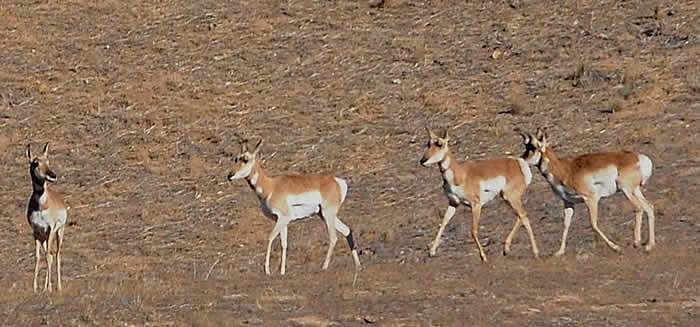
Let’s provide a brief history of its ancient past. The Mojave Desert is a parched landscape today but about 10,000 years ago you might have called it the land of many lakes; there were also many abundant animals. Some animals went extinct after the last ice age and some, like the pronghorn antelope, still reside in the surrounding area in small herds. As this last ice age began to retreat, glacial melting, cooler temperatures, and higher precipitation produced a situation in which lakes could form and maintain their levels. There was a long chain of large lakes which ran from Nevada, even Death Valley, all the way down through the Mojave Desert. The remnants of these large lakes are known today to desert dwellers as “Dry Lakes”.
The humans of this period led a relatively simple life moving randomly up and down the string of lakes hunting the large animals that frequented the area. One of these lakes, Rogers Dry Lake, is where Edwards Air Force Base is located.
There were many explorers to this area in the first half of the 1800’s. Jedediah Smith entered the area in 1827, even Kit Carson camped here in 1844. Edward Beale introduced his camels to the valley in 1857.
We all think of the 20-Mule Team Borax image when thinking of this area, this is because borax mining rapidly grew in this area to become one of the leading industries of the Mojave Desert from 1883 to 1889. The borax industry and the gold and silver industries combined to make the town of Mojave a very important place in the late 1870’s and 1880’s. In 1884 the Southern Pacific Railroad route was joined by the Santa Fe line at Mojave, providing even greater access to supplies and markets. There were some ranching and farming efforts in the valley but most failed.
In 1910, Ralph, Clifford and Effie Corum built a homestead on the edge of Rogers Lake. When a post office was commissioned for the area, they named it Muroc, a reversal of the Corum name, because there was already a town named Corum. At this time there was another colorful character that joined the Edwards’ history, a woman, Pancho Barnes, built her famous Rancho Oro Verde Fly-Inn Dude Ranch (aka: Happy Bottom Riding Club) that would be the scene of many parties and celebrations to come, known as a place that test pilots would hang out until it burned down in 1953. The bar at this location was featured prominently in the movie The Right Stuff. The dry lake was also the base of hot rodding with racing on the dry lake. In fact the runway that the Space Shuttle landed on follows the route that hosted racing in the 1930s.
The first flight activity occurred at Muroc in 1937 when the entire Army Air Corps participated in a large-scale maneuver, and from that point on the bombing range grew in size. The attack on Pearl Harbor led to the designation of the Muroc Bombing and Gunnery Range, Muroc Lake; later the name of the facility was changed to Army Air Base, Muroc Lake, then in 1942 it became Muroc Army Airfield.
In 1942 the volume of flight tests in Ohio was one of the factors driving a search for a new site where a top secret airplanes could undergo tests in secrecy. After examining a number of locations around the country searching for good weather and a more secure location, they selected a site along the north shore of Rogers Dry Lake about six miles away from the training base at Muroc.
The success of these programs attracted a new type of research activity to the base in late 1946, rocket powered aircraft. The rocket-powered Bell X-1 was the first in a long series of experimental airplanes. In 1947 Captain Charles “Chuck” Yeager flew the small bullet-shaped airplane and became the first human to exceed the speed of sound.
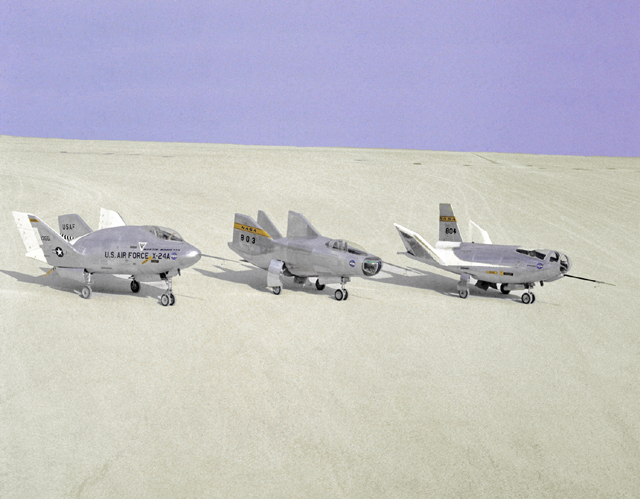
Four months later the site was re-designated Muroc Air Force Base; then in 1949, Muroc was renamed Edwards Air Force Base in honor of Captain Glen Edwards, who was killed a year earlier in the crash of the Northrop YB-49 Flying Wing.
In 1947 the decision was made to build a missile test facility on the base. A ridge east of Rogers Dry Lake on Edwards AFB was chosen for the facility that was to be named the Experimental Rocket Engine Test Station.
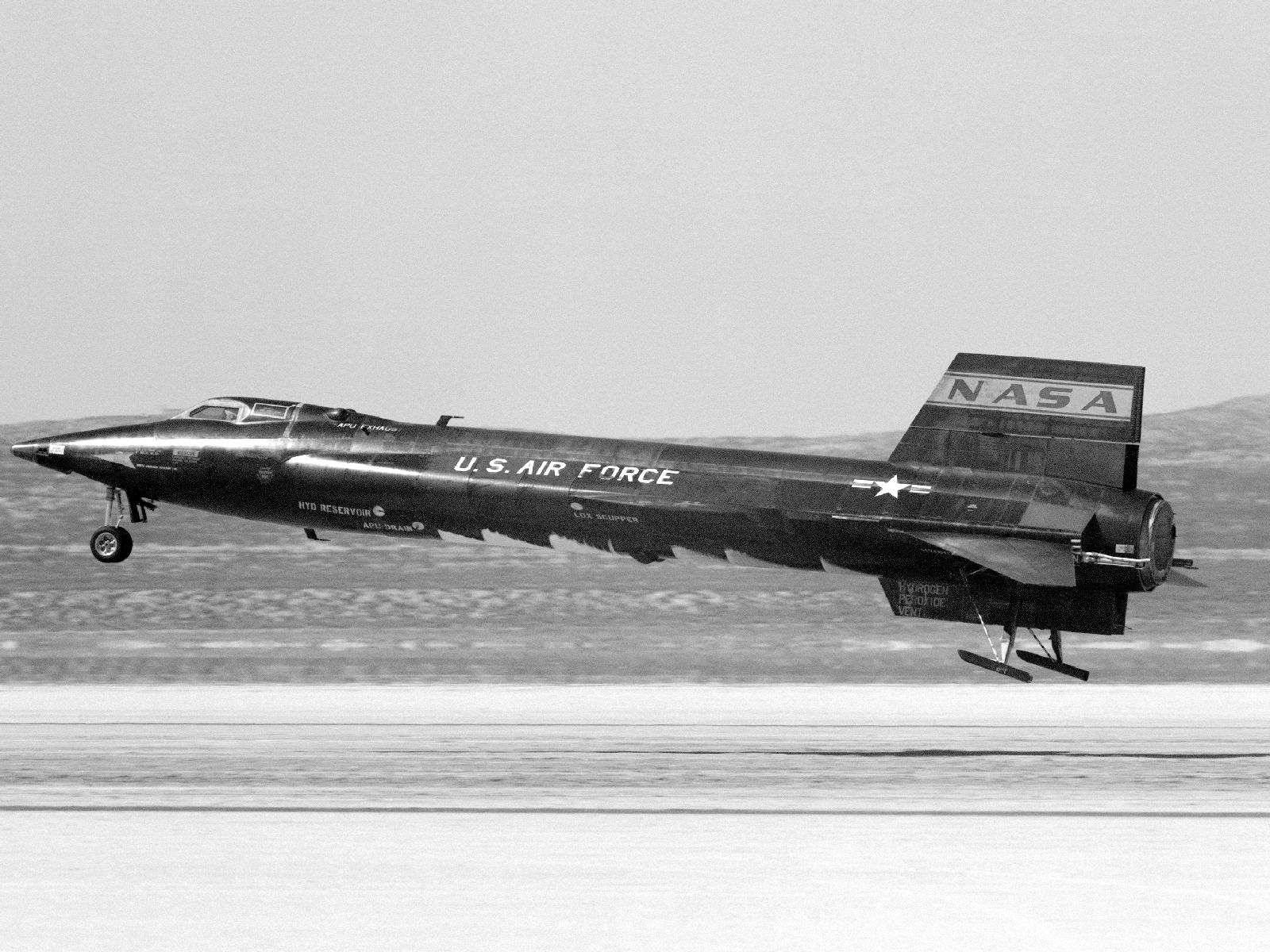
In 1951, Scott Crossfield became the first man to reach Mach 2. Just nine months later, Major Arthur “Kit” Murray flew to a new altitude record of 90,440 feet. in 1956, Capt. Iven Kincheloe became the first man to rise above 100,000 feet, to an altitude of 126,200 feet, just weeks later Capt. Mel Apt became the first to exceed Mach 3. After attaining top speed he tumbled violently out of control and Apt was never able to recover.
Throughout the 1950’s, American airplanes regularly broke absolute speed and altitude records at Edwards, but after 1961 new programs got underway and Major Robert M. “Bob” White became the first man to exceed Mach 4. Three months later he reached Mach 5, then months later he exceeded Mach 6. Major White also became the first man to fly an airplane in space when he climbed to 314,750 feet in 1962.
On December 10, 1963, while testing an NF-104A rocket-augmented aerospace trainer, Chuck Yeager narrowly escaped death when his aircraft went out of control at 108,700 feet (nearly 21 miles up) and crashed. He parachuted to safety at 8,500 feet after battling to gain control of the powerless, rapidly falling aircraft. In this incident he became the first pilot to make an emergency ejection in the full pressure suit needed for high altitude flights. This was also featured prominently in the movie The Right Stuff.
In 1967 William J. “Pete” Knight reached Mach 6, a speed that remains to this day the highest ever attained in an airplane.
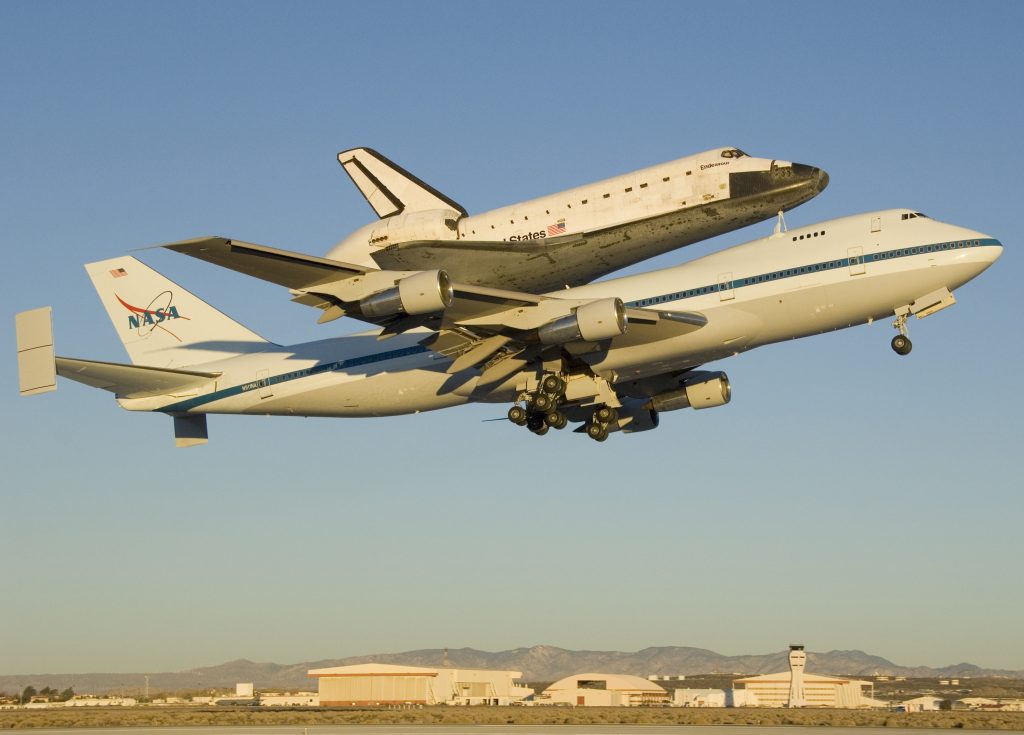
In the late 1980’s, Edwards saw the first giant flying wing to soar over the base in nearly 40 years. After President Nixon announced the Space Shuttle program in 1972, Edwards was chosen for Space Shuttle orbiter testing. The prototype Space Shuttle Enterprise was carried and released in a test landing; in all 13 test flights were conducted at Edwards.
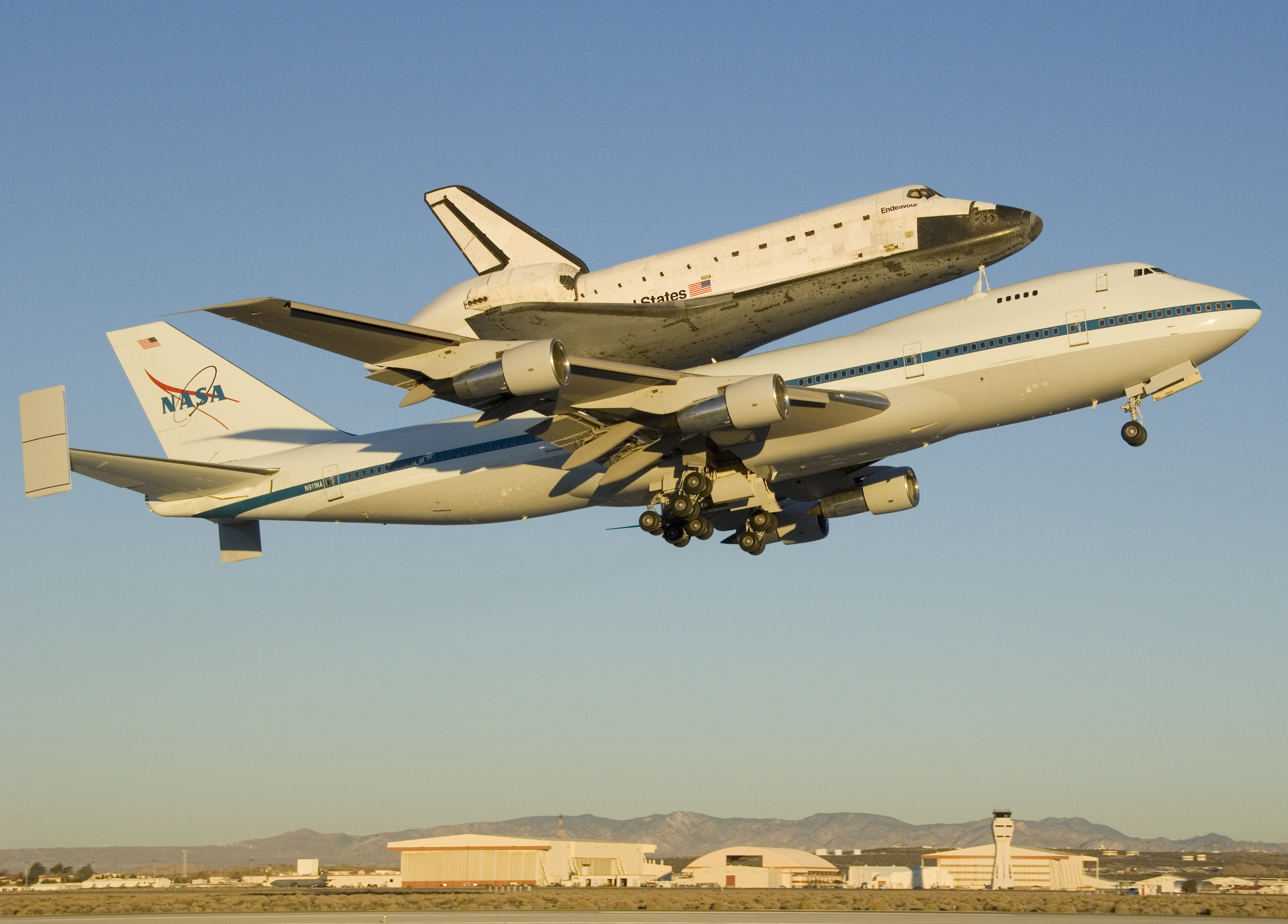
After Space Shuttle Columbia became the first shuttle launched into orbit in 1981, it returned to Edwards for landing. The immense lakebeds were an important factor in its selection and it continued to serve as the primary landing area for the space shuttle until 1991. Edwards continued to serve as backups for the duration of the shuttle program. Space shuttles landed at Edwards as recently as 2009.
The movie, The Right Stuff , documents the beginning of the American space program at Edwards Air Force Base. It’s an excellent and entertaining true story for those that want to watch it. (3 hours duration)
The area is now also the center of activity for private spaceflight ventures. The Mojave Spaceport is located just north of Edwards as well as several proving grounds for car companies. You might even grab a bite to eat at The Astro-Burger, a highly rated burger joint.
This website documents the many crashes on and around Edwards Air Force Base:
https://www.latimes.com/business/la-fi-mojave-crash-hunter-20130531-dto-htmlstory.html
The following link was created for this DesertUSA blog, it highlights many interesting things on and around Edwards Air Force Base:
https://arcg.is/1HPdh0H
Take It Easy – Mojave


Thanks Linda 🙂
Very interesting article. We have a Jedediah Smith Road in Temecula but I never knew who he was LOL. Guess I better read up on my California history. I always enjoy your articles Jeff.