
California’s Pala District is a renowned region for mining gemstones and is considered one of North America’s most important gemstone localities. Located in northern San Diego County, the Pala District has a rich history of gemstone discoveries. It has yielded an impressive array of minerals and remains an active gemstone extraction and exploration area.

Tourmaline from Pala Mines
The Pala District is renowned for its wide range of gemstones, offering a diverse selection to gem enthusiasts and collectors. Among the notable rocks discovered in this area are tourmaline, which includes the highly coveted pink and green varieties and the blue-capped pink elbaites. The pink tourmalines from Pala are particularly prized for their intense and rich hues, ranging from light pastel pinks to deeper magenta shades. The green tourmalines can display shades of green, from pale mint to deep emeralds. Some tourmaline crystals from the Pala District exhibit color zoning, where different colors are present in distinct sections of the crystal. The color variation adds to the uniqueness and visual appeal of the tourmaline.
Alongside tourmaline, the Pala District produces other gemstones such as kunzite, morganite, aquamarine, garnet, and quartz, adding to the region’s diversity and mining importance.
Purple Kunzite
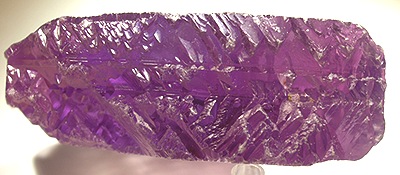
Purple kunzite from the Pala District is relatively rare and highly sought after by gemstone enthusiasts and collectors. The color can vary from light lavender to deeper shades of violet. These purple tones often exhibit a delicate and pleasing pastel quality, adding to the gemstone’s allure. While kunzite, in general, is not as common as some other gemstones, purple kunzite specifically is considered rarer. It is less frequently encountered than the more common pink and peachy-pink varieties of kunzite.
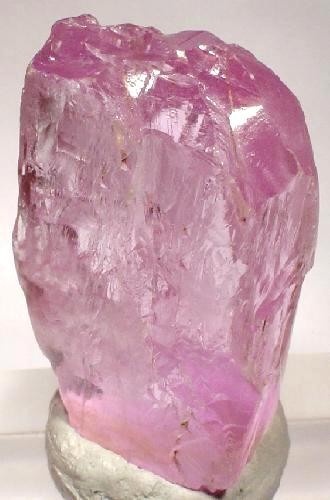
The photographer notes: A GORGEOUS, VERY GEMMY, pristine, doubly terminated lilac kunzite crystal from the famous Pala Chief Mine of California. The lilac color on this one is outstanding and this is cutting-grade material. The bottom termination is contacted, flat, but complete. Note the very interesting, complex and multifaceted terminations on this piece and the two C-axis shots really show the intense lilac color. Any white spots you see ar ereflections as the color is uniform in person. Ex Bill Smith Collection. weight is hefty at 50 grams. 4.6 x 2.8 x 2.4 cm.
Geological of the Pala Mining District
The geological complexity of the Pala Mining District involves the interaction of pegmatites, hydrothermal processes, metamorphism, and mineralization. This diverse geology has created favorable circumstances for developing a range of precious and semi-precious gemstones, establishing the Pala District as a prominent and renowned gemstone locality.
Pala is located within a belt of pegmatite, which features igneous rock characterized by exceptional mineralization. These pegmatites often contain well-formed crystals, making them highly desirable for gemstone exploration.
Beryllium-rich rocks, particularly granitic pegmatites, in the Pala District have provided the necessary chemical environment to form gemstones like tourmaline, kunzite, morganite, and aquamarine.
Furthermore, the region has undergone hydrothermal activity, wherein mineral-rich fluids circulated through fractures and faults. These hydrothermal processes have played a significant role in creating and enriching gemstone deposits throughout the area.
Pala Mining History
Mining in the Pala District dates back to the late 1800s, with the discovery of tourmaline. Initially, gemstones were found by local ranchers and farmers, leading to a mining boom. The Pala Chief Mine, Tourmaline Queen Mine, and Stewart Mine are some of the historic mines in the area.
The most active mining period was from 1900-1922 when the demand for pink tourmaline in China was driven by Empress Dowager Cixi (aka Tzu His), who had a passion for pink tourmaline. Tiffany & Co. facilitated the trade of pink tourmaline between San Diego and China. The demand for pink tourmaline declined after the death of the Empress in 1911. According to the San Diego Natural History Museum, San Diego mines provided China with more than 120 tons of gem-quality pink tourmaline between 1902 and 1910.

Tourmaline Queen Mine
The Tourmaline Queen mine in the Pala District has a rich history of producing exceptional crystals of tourmaline and morganite beryl. Two Basque sheepherders originally discovered the mine in the late 1800s. A vein exposed above ground caught their attention, and they claimed it as a quartz mine.
The Tourmaline Queen Mine is renowned for its high-quality tourmalines, including specimens with exceptional clarity, color, and size. The discovery of the “Candelabra,” the extraordinary blue-capped pink elbaites, 1972 at this iconic mine adds to its legacy. Further, it highlights the significance of the Tourmaline Queen mine in the gemstone world.
Pala Chief Mine
One of the oldest mines in the Pala Mining District is the Pala Chief Mine, known for its exquisite pink tourmaline crystals and purple kunzite. The mine, discovered in 1903, was pivotal in establishing Pala as a prominent gemstone mining region.
One of the notable discoveries at the Pala Chief Mine was the primary deposit of purple gem spodumene, more commonly known as kunzite. This particular find established the mine as a significant source of high-quality kunzite worldwide. The deep purple hues of the spodumene crystals found at the mine captured the attention of gem enthusiasts and collectors.
Gem-quality kunzite specimens from the Pala Chief Mine were highly regarded for their exceptional color and clarity. These specimens were sent to renowned jewelry houses, including Tiffany & Co., to be cut into fine gemstones.
Where to Prospect for Gems in Pala Mining District
Most of the mines in the Pala District are private claims and not open to the public. The Pala Chief and Oceanview mines offer fee-based digs. Reservations are required and can be booked online at digforgems.com.
The Ocean View Mine
The Ocean View Mine is open year-round for fee-based digs on select days of the week. They provide the equipment to screen the dump piles from the mines and some general instructions. You will have a chance to comb through the tailing piles in search of tourmaline, kunzite, morganite, aquamarine, schorl, lepidolite, beryl, quartz, and other gemstones. You can take home one 5-gallon bucket of rocks you have screened and washed. Each dig event last about four hours.
The Pala Chief Mine
The Pala Chief Mine has seasonal fee-based dig events from October thru June. The Pala Chief Digs offers a unique opportunity to explore old mine dumps from the Pala Chief Mine and nearby prospects. Unlike the Oceanview fee dig, these dumps have not been sorted, increasing the chance of finding matrix specimens and gems missed by miners focused on larger carving-grade samples. The Chief Dig requires bringing your equipment, such as screens, buckets, gloves, hammers, and rakes. You can expect to find a variety of minerals, including tourmalines, aquamarines, morganites, kunzite, and quartz crystals. Participants can take home up to two five-gallon buckets of rock they collect without additional fees. For information on upcoming Chief Digs, visit the digforgems.com.
Related Articles:
Tourmaline Gemstone
DesertUSA’s Rockhounding Guide – Links to articles about prospecting for gold, gemstones, fossils and more.
Himalaya Mine – Mesa Grande (San Diego County)